



Aerial view of paris and its charging infrastructure
Twincharge
An agentic-GIS decision platform for public authorities to plan and coordinate public and private EV-charging investments.
Supported by EIT Urban Mobility
Product Details
Twincharge changes the paradigm of EV charging planning. For the first time, the competent public authority, not fragmented private operators, holds control of how its territory EV charging infrastructure is planned and managed. Built on Voltaage's agentic-GIS decision platform, Twincharge forecasts charging demand street by street, selects optimal sites and simulates deployment scenarios balancing demand, grid feasibility, territorial equity and operator ROI.
The authority can grant controlled access to territorial Charge Point Operators while coordinating public and private investment through a single, shared deployment plan. This ensures charging infrastructure is rolled out where citizens actually need it. A built-in AI regulatory assistant automatically generates the procurement documents (e.g. SDIRVE in France and PIR in Italy) required to secure public funding and launch tenders.
Stop guessing where to build. Take control of your territory's EV charging future!
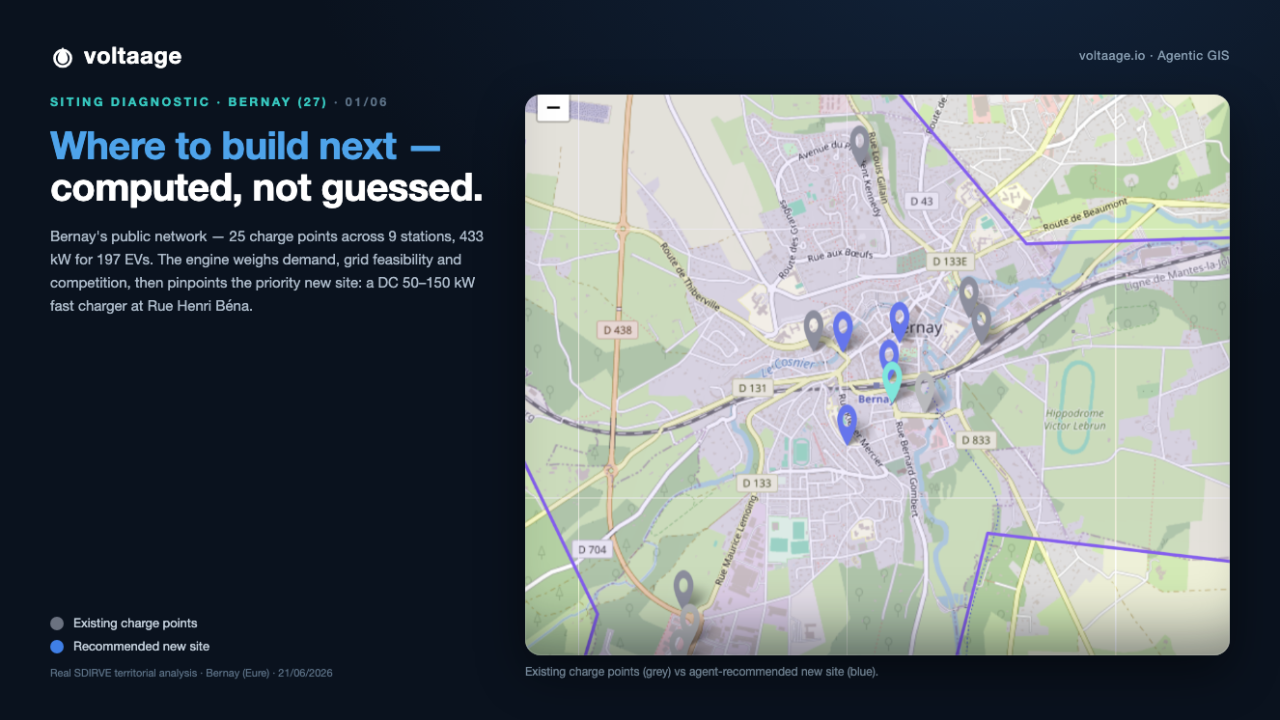
The engine weighs demand, grid feasibility and competition, then pinpoints the priority new site:
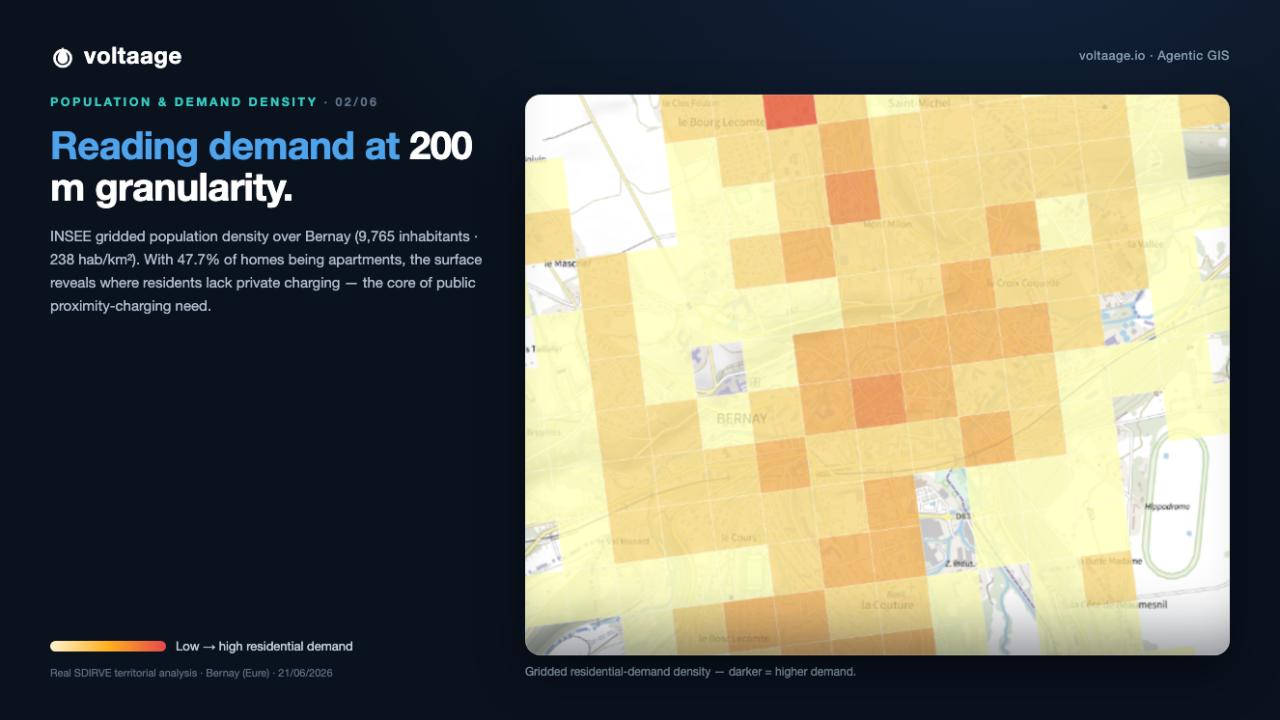
The surface reveals where residents lack private charging using official public data.
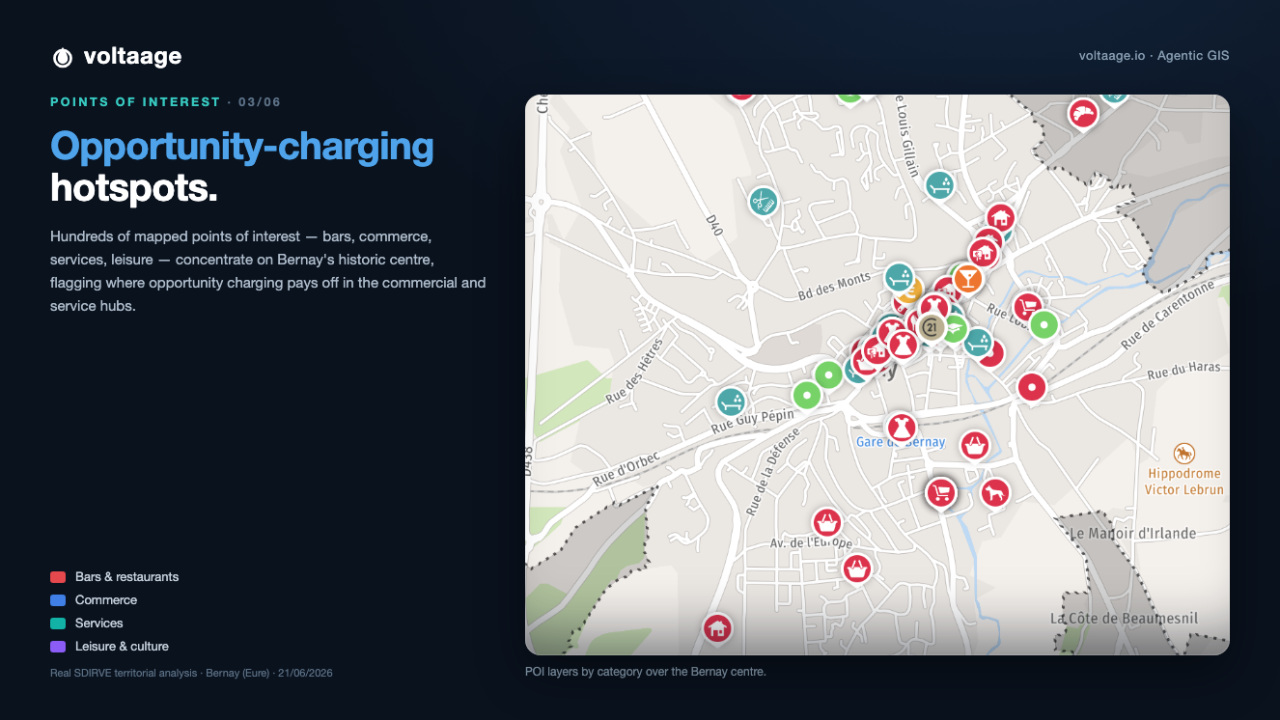
It flags where opportunity charging pays off in the commercial and service hubs.
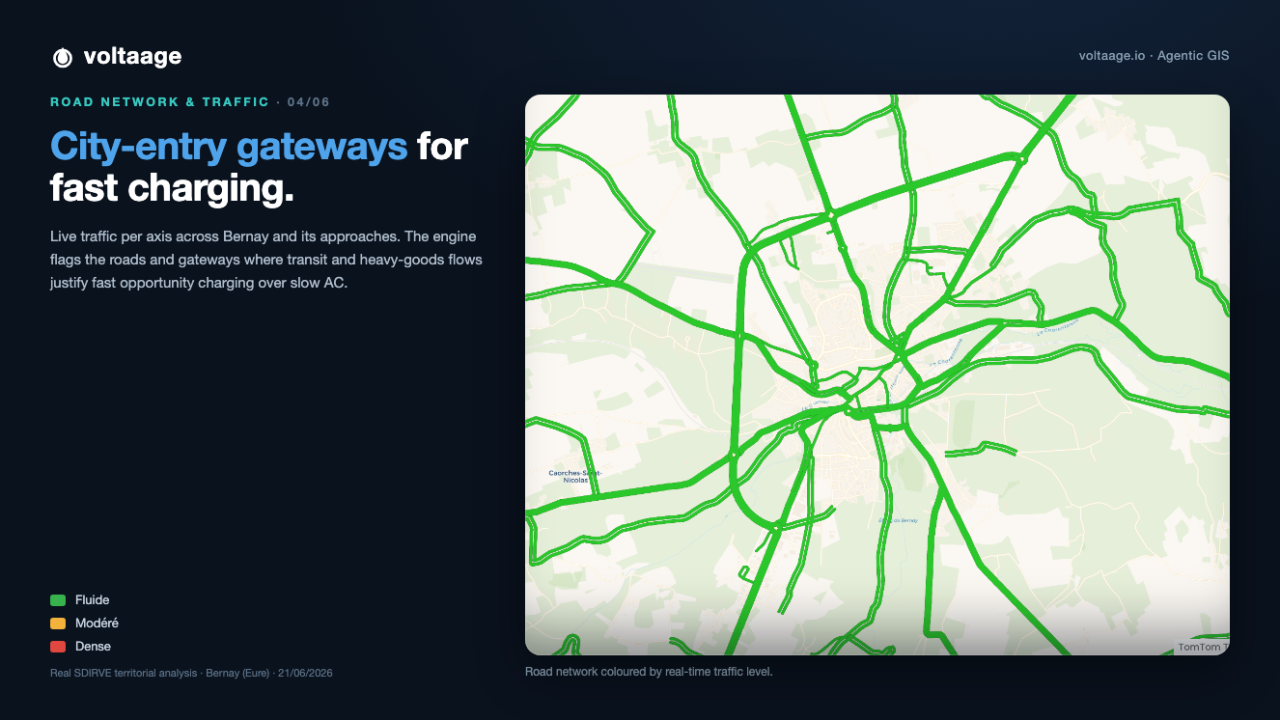
The engine flags the roads and gateways where transit and heavy-goods flows justify fast opportunity charging.
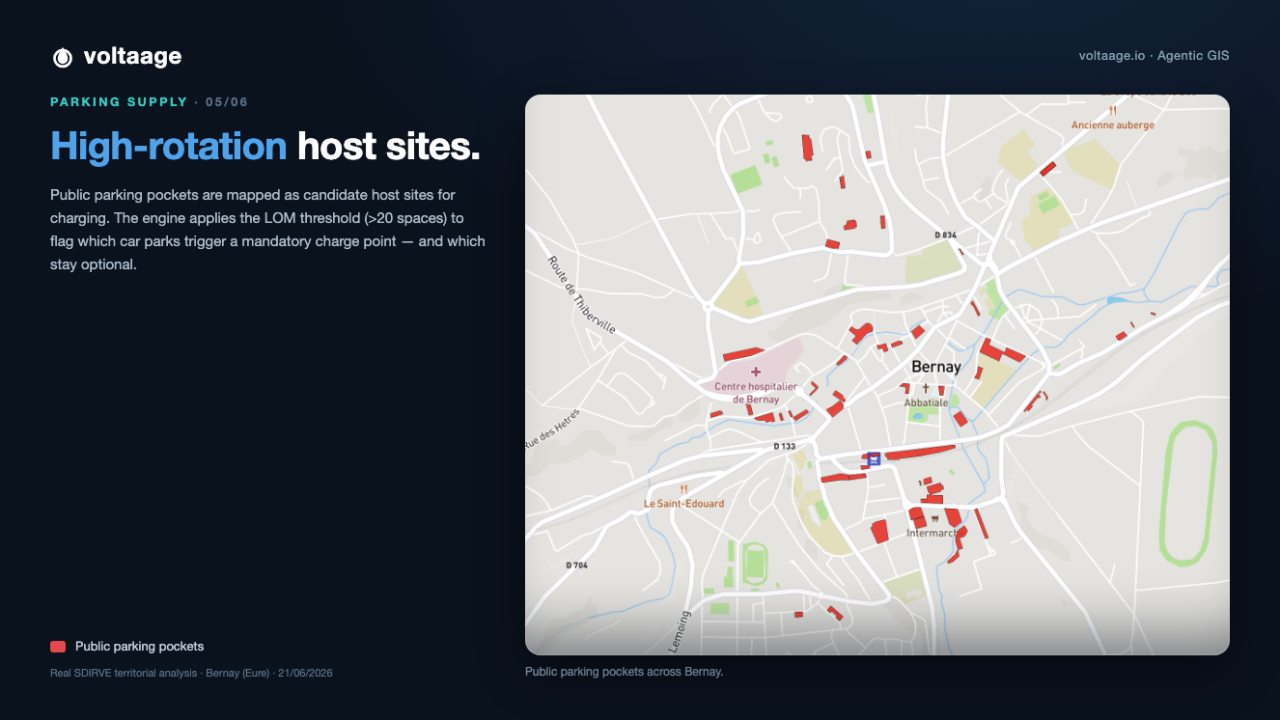
The engine applies the LOM threshold (>20 spaces) to flag which car parks trigger a mandatory charge point - and which stay optional.
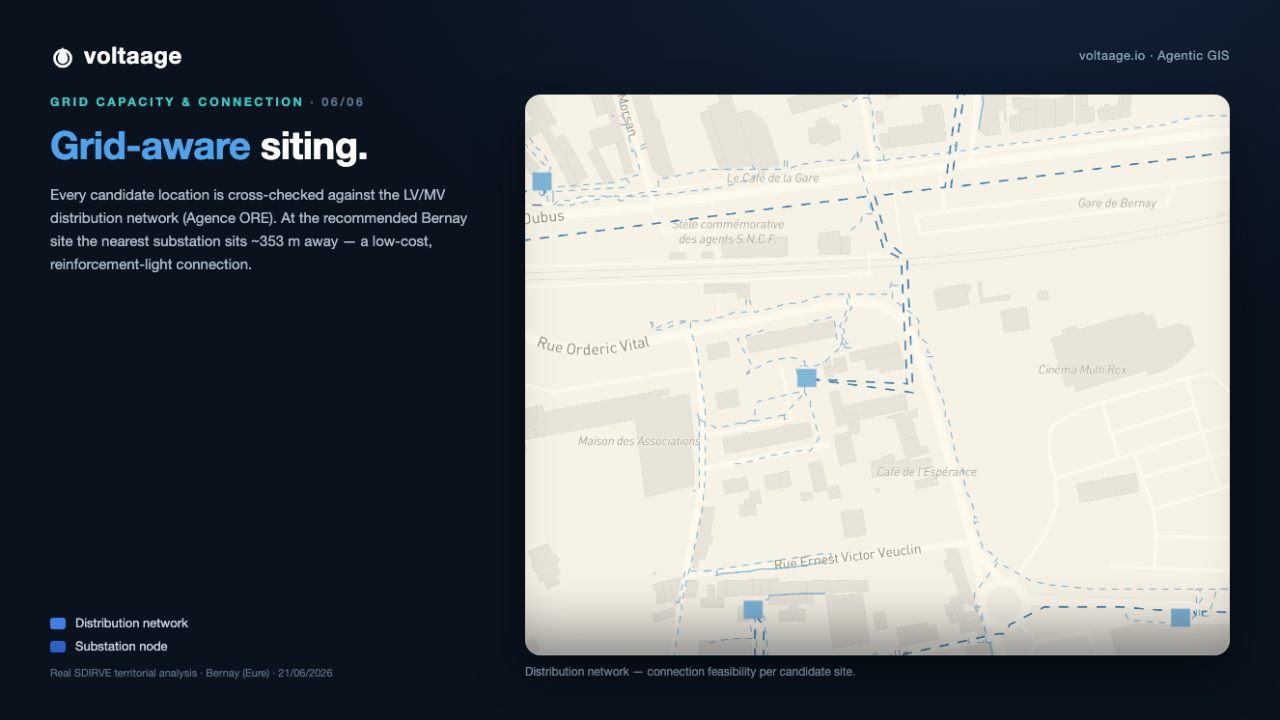
Every candidate location is cross-checked against the LV/MV distribution network assuring the a low-cost, reinforcement-grid connection.
The engine weighs demand, grid feasibility and competition, then pinpoints the priority new site:
The surface reveals where residents lack private charging using official public data.
It flags where opportunity charging pays off in the commercial and service hubs.
The engine flags the roads and gateways where transit and heavy-goods flows justify fast opportunity charging.
The engine applies the LOM threshold (>20 spaces) to flag which car parks trigger a mandatory charge point - and which stay optional.
Every candidate location is cross-checked against the LV/MV distribution network assuring the a low-cost, reinforcement-grid connection.
Best Practices
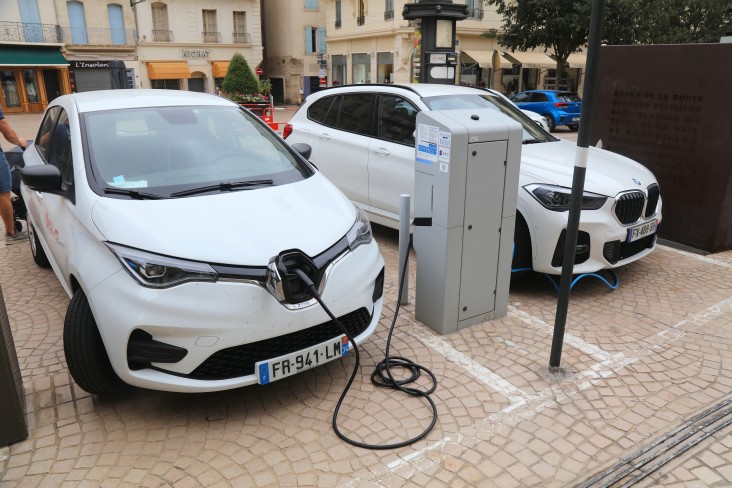
Supporting data-driven EV infrastructure planning in Vallée de la Seine
Availability
Discover cities and markets where the product is available