

Why urban health starts with how we move
Congestion, climate targets and changing travel habits are pushing policymakers to redesign transportation systems that were largely built for the last century. But beyond sustainability and efficiency, another priority is increasingly shaping urban mobility strategies: health.
The connection is more significant than it first appears. Every day, millions of people are exposed to the health impacts of the way cities move. Traffic generates emissions that affect air quality. Busy roads create noise levels associated with stress and cardiovascular disease. Car-dependent urban environments reduce opportunities for physical activity and contribute to increasingly sedentary lifestyles.
These challenges are not isolated. They are symptoms of the same mobility model.
According to the European Commission, air pollution remains the largest environmental health risk in Europe. At the same time, environmental noise is considered the second-largest environmental health risk, with road traffic representing the primary source of exposure for many urban residents. The World Health Organization (WHO) estimates that around 100 million Europeans are exposed to unhealthy levels of traffic noise, contributing to sleep disturbance, stress and cardiovascular conditions and that environmental noise leads to the loss of at least 392,000 healthy life years annually across the European Union.
As cities search for solutions, mobility is increasingly being viewed not only as a transport challenge but as a public health opportunity. The question is no longer simply how to move people more efficiently, but how to create mobility systems that support healthier lives.
Health impacts shaped by everyday mobility
The health implications of urban mobility begin long before clinical outcomes appear. They are embedded in daily routines: commuting to work, dropping children at school or moving through congested streets.
Transport remains one of the key contributors to urban air pollution. Despite improvements in vehicle technology, road traffic continues to emit pollutants such as nitrogen dioxide and fine particulate matter, particularly in dense urban environments. These pollutants are strongly linked to respiratory and cardiovascular diseases, as well as premature mortality.
At the same time, the same traffic that generates emissions also produces noise. Chronic exposure to road traffic noise has been associated with sleep disruption, stress, hypertension and an increased risk of heart disease. In urban areas, this exposure is often continuous, creating long-term physiological stress even when it is not consciously perceived.
Beyond pollution and noise, modern mobility systems also shape behaviour. When cities prioritise car-based movement, everyday physical activity declines. Short trips that could be walked or cycled are replaced by motorised transport, contributing to sedentary lifestyles. The WHO has identified physical inactivity as a major risk factor for diseases such as obesity, diabetes and cardiovascular disease, while evidence from The Lancet Physical Activity Series highlights inactivity as one of the leading global risk factors for mortality. Research on urban design and health further shows that transport systems and built environments strongly influence levels of active mobility and population health outcomes.
Mobility systems influence health in multiple interconnected ways: through the quality of the air people breathe, the noise they are exposed to, the opportunities they have to be physically active and the safety and accessibility of the environments in which they travel.
Cities redesigning mobility around health
Across Europe, several cities are already demonstrating how mobility policy can translate directly into public health outcomes. While each context is different, the direction of travel is consistent: reduce car dependency, expand active mobility and reclaim urban space for people.
Copenhagen remains one of the most cited examples. Over decades, the city has built a dense network of protected cycling infrastructure, combined with traffic calming measures and long-term policy continuity. Cycling is not treated as a niche activity but as a mainstream mode of transport used for commuting, education and daily errands. This shift has enabled high levels of everyday physical activity while reducing reliance on private cars in the urban core.
In the Netherlands, Utrecht has taken a similarly systematic approach. The city has integrated cycling into its growth strategy, prioritising direct routes, large-scale bike parking facilities and seamless connections with public transport. The result is a mobility system where active travel is often the fastest and most convenient option for short urban trips.
Amsterdam illustrates how sustained policy shifts can reshape urban space over time. Through traffic calming measures, reduced parking availability and long-term investment in cycling infrastructure, the city has progressively rebalanced its streets away from private cars. Today, cycling plays a dominant role in daily mobility patterns across many neighbourhoods.
More recently, Paris has become one of the most visible urban mobility transformations in Europe. Through its 15-minute city approach, the city has expanded cycling infrastructure at scale, introduced low-emission zones and reduced road space for cars. These changes aim not only to reduce emissions but also to improve liveability, safety and public health through cleaner air and more accessible public space.
Barcelona has experimented with “superblocks” (superilles), reorganising traffic flow to limit through-traffic in residential areas. By reclaiming street space for pedestrians and local activity, the city has reduced noise and air pollution at neighbourhood level while improving access to public space. The model highlights how relatively targeted spatial interventions can deliver measurable improvements in urban health.
Across these cities, a clear pattern emerges. When urban mobility prioritises walking and cycling, multiple benefits appear simultaneously: reduced pollution, lower noise exposure, increased physical activity and improved quality of public space.
These examples also show that mobility policy is increasingly being framed as public health policy. Transport decisions are no longer evaluated solely on efficiency, but on their broader impact on wellbeing.
From infrastructure to people: the missing link
The examples of Copenhagen, Utrecht, Paris and Barcelona demonstrate the impact of infrastructure and urban design. Yet city planners increasingly recognise that physical changes alone do not guarantee healthier mobility systems.
Mobility choices are deeply habitual. Many people continue using private cars out of convenience, routine or perceived reliability, even when alternatives exist. This means that infrastructure alone is not always sufficient to trigger modal shift. As a result, more attention is being placed on behavioural change strategies within mobility policy. These approaches combine data, incentives and engagement to encourage more sustainable travel decisions. Rather than focusing exclusively on systems, they focus on users.
Healthier mobility also depends on safety. The design of streets and transport networks has a direct impact on injuries and fatalities, particularly among vulnerable road users such as pedestrians, cyclists, children and older adults. This is reflected in the Vision Zero approach adopted by many European cities, which recognises that road deaths and serious injuries are preventable rather than inevitable.
At the same time, healthy mobility systems are not only those that encourage walking and cycling. They are also systems that remain accessible and inclusive for people of different ages and abilities. As European cities adapt to ageing populations, mobility planning is increasingly focusing on ensuring that older adults, children and people with reduced mobility can move safely and independently. Accessible public transport, pedestrian-friendly streets and inclusive infrastructure are becoming essential components of healthier and more equitable urban environments.
These priorities are increasingly being supported by data, technology and innovation. In 2023, the REACTIVITY project piloted behavioural change strategies designed to encourage more active and sustainable travel. Through gamification, incentives and digital tools, the project tested how citizens could be motivated to choose walking, cycling and public transport more frequently. The results highlighted the potential of behavioural interventions to complement infrastructure investments and support healthier mobility habits.
More recently, the SAQM Trial project generated new insights into passenger exposure to air pollution in metro systems, while the recently launched DAVER project is focusing on the continuous monitoring of vehicle emissions and traffic noise under real-world urban conditions. The project brings together cities, research organisations and industry partners, including Opus Remote Sensing, a company with extensive experience in vehicle emissions remote sensing technologies. By identifying high-emitting and high-noise vehicles through automated sensing systems, DAVER aims to provide cities with more precise information to support cleaner air, quieter streets and healthier urban environments. The project will pilot its solution in Barcelona, Thessaloniki and Groningen, helping authorities better understand the relationship between vehicle emissions, noise pollution and urban health.
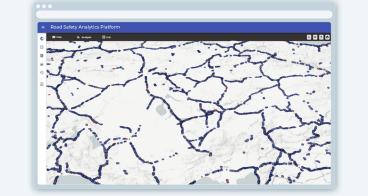
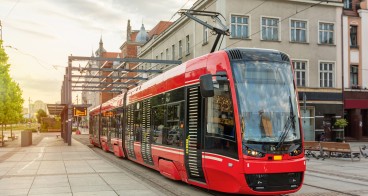
Innovation is also helping cities create safer urban environments. The SAFELY project supported authorities in Konya and Sarajevo in identifying high-risk locations for vulnerable road users, while advanced driver assistance systems tested through the ARISE project have helped tram drivers detect potential hazards and reduce collision risks. Complementing these efforts, the recently launched PantoTech project is applying predictive monitoring technologies to improve the safety and reliability of tram and metro networks.
Taken together, these developments reflect a broader shift in mobility policy. Building healthier cities is no longer simply about expanding infrastructure. It is about understanding how people travel, protecting them from harm and ensuring that everyone can access the benefits of urban mobility.
Final thoughts
The relationship between mobility and health is becoming increasingly difficult to ignore. Air quality, noise exposure and physical inactivity are all shaped by how cities design and manage movement.
Across Europe, cities are demonstrating that alternative approaches are possible. From Copenhagen and Utrecht to Paris and Barcelona, investments in active mobility are producing measurable improvements in urban health and liveability.
At the same time, shared mobility and behavioural change initiatives are expanding the tools available to cities and organisations seeking to reduce car dependency.
Taken together, these developments point to a broader shift. Mobility is no longer just about moving people efficiently. It is about shaping the conditions in which people live.
The cities that succeed in the future will likely be those that recognise a simple but powerful idea: how we move determines how we live.