

Shared transhipment hubs for sustainable urban logistics
Supported by EIT Urban Mobility
The Challenge
Last-mile logistics in dense urban areas face a combination of access restrictions, limited curb space and operational constraints. For logistics operators, these conditions make it difficult to transfer parcels between vehicles, consolidate routes and manage deliveries without increasing van circulation or returning frequently to a central depot.
The NanoHubZone pilots in Brussels and the Barcelona metropolitan region explored how small, shared transhipment infrastructure could address these challenges. In Brussels, the focus was on enabling several logistics operators to share modular transhipment zones in the public realm. In the Barcelona region, the challenge also extended to connecting logistics operations across several municipalities and exploring links between cargo bikes and public transport.
Both pilots therefore aimed to test whether strategically located, ready-to-use infrastructure could make last-mile operations more flexible while supporting lower-emission delivery models.
The Solution
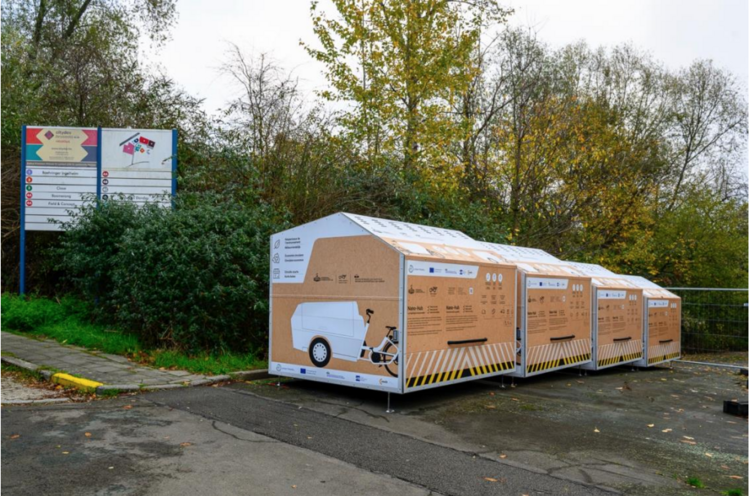
NanoHubZone introduced modular, shared transhipment infrastructure that enables goods to be transferred between vehicles with different capacities, such as vans and cargo bikes. The approach was tested through two different deployment models.
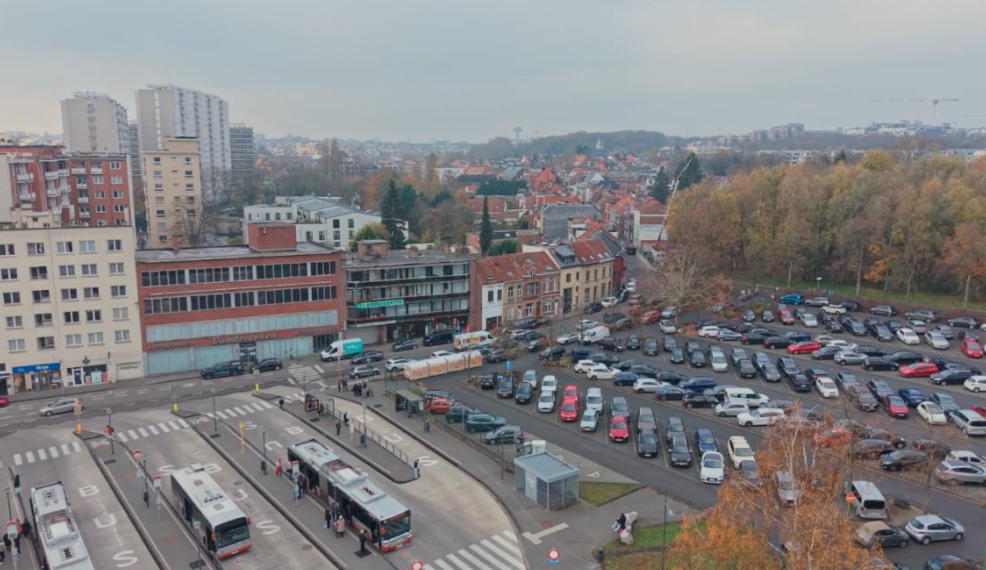
In Brussels, two shared transhipment zones were installed: one at Rodebeek P+R and one on Avenue Ariane. Each zone contained four NanoHubs, creating shared infrastructure for multiple logistics operators.
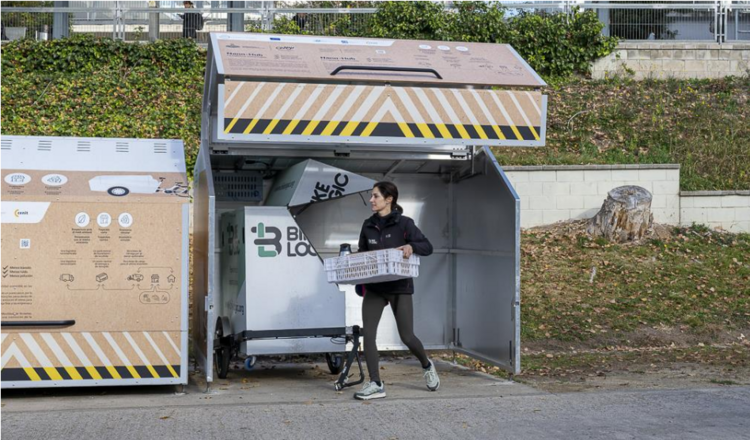
In the Barcelona region, eight NanoHubs were deployed across five cities - Sant Cugat del Vallès, Sabadell, Granollers, Mollet del Vallès and Mataró - forming a multi-city network. Operators tested the hubs for trailer storage, temporary parcel drop-off and cross-docking. The pilot also explored an inter-city logistics connection, with parcels transported by the Sagalés e13 bus from Mataró to Sabadell before continuing by cargo bike.
Making an impact
Both pilots successfully demonstrated the operational relevance of shared transhipment infrastructure.
In Brussels, the two zones supported 660 deliveries across the main and earlier testing periods, with 10 transhipments recorded. Eleven logistics operators expressed interest in the solution and its potential operational use cases. The battery management or balancing logistics for e-scooters and e-bikes was also tested, with an efficiency gain estimated at around 20% over the days observed.
In the Barcelona region, the NanoHub network supported different logistics workflows. BikeLogic reported six transhipments impacting full shifts and around 200 deliveries, while Coop de Pedal reported 10 transhipments impacting full shifts and approximately 480 deliveries. An inter-city test was also completed using the Sagalés e13 bus between Mataró and Sabadell.
Across the Barcelona pilot, eight NanoHubs were installed and 681 deliveries were reported as impacted. The pilots also generated further interest in expanding the networks and developing multimodal logistics models.
Lessons learnt
The two pilots showed that shared transhipment infrastructure can support different operational models depending on the characteristics of the location and the needs of local logistics operators.
In Brussels, the pilot demonstrated the potential of shared, multi-operator zones in the public realm. The experience also highlighted the importance of selecting and securing locations appropriately, with road-safety measures introduced at the Rodebeek site.
In the Barcelona region, the wider network demonstrated how NanoHubs can support several complementary activities, including temporary storage, trailer management and cross-docking. The inter-city test also showed the potential for combining cargo bikes with public transport to connect logistics operations between municipalities.
A key lesson across both pilots was the importance of involving operators in identifying locations and defining practical use cases. At the same time, the short testing period limited the ability to quantify longer-term efficiency gains. Further operation would be needed to establish stronger performance evidence and assess how the networks could be expanded or reconfigured as adoption grows.