

Monitoring loading bays to improve urban logistics in Trondheim

Supported by EIT Urban Mobility
The Challenge
European cities are under increasing pressure to manage urban freight more effectively as e-commerce continues to drive growth in last-mile deliveries. Delivery vehicles often spend lots of time searching for available loading bays or stop illegally when designated spaces are already occupied. Across Europe, urban freight already accounts for 10-15% of vehicle miles in cities and generates a 25% of transport-related CO2 emissions and these figures expected to climb further as parcel volumes are projected to rise 78% by 2030.
Trondheim, a city in Norway, like many European cities, had almost no visibility into how its loading and unloading zones were actually being used. Drivers regularly double-parked or overstayed because there was no way to check bay availability in advance, which leads to backing up traffic and creating friction with cyclists and pedestrians. Without data on who was parking where and when demand peaked, the city had little basis for planning enforcement or preparing for the surge in deliveries ahead.
The Solution
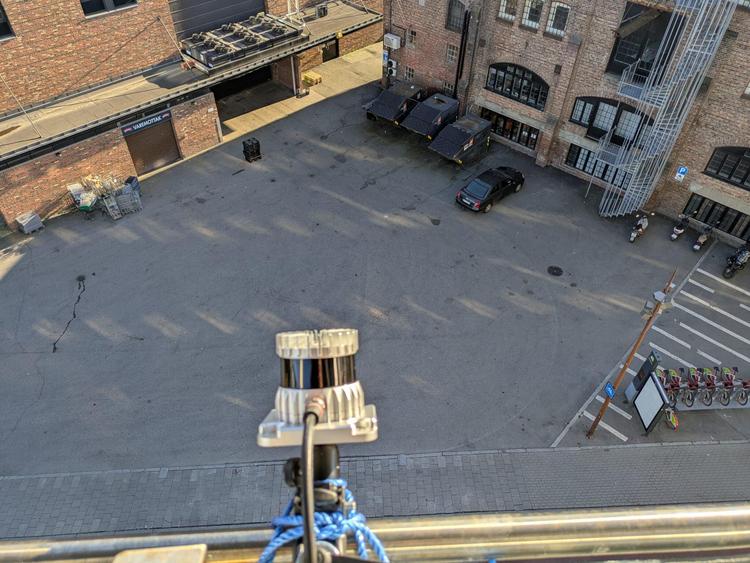
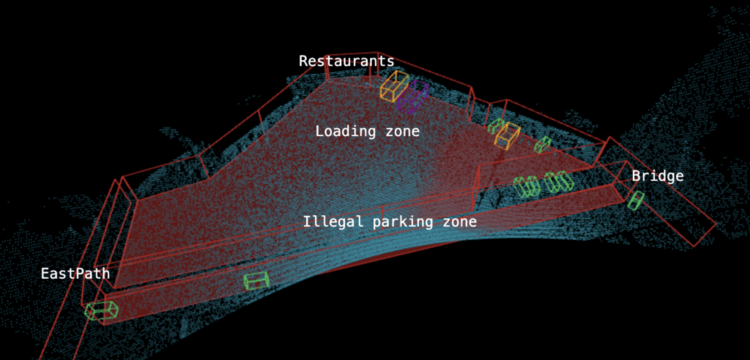
Digiflec deployed its Connected Intelligent Infrastructure Monitoring (CiiM) platform to monitor loading bays in Trondheim's city centre using 3D LiDAR sensors and AI-powered analytics. Installed at an urban shopping centre loading area, the system continuously monitored loading bay occupancy, vehicle classifications, dwell times, traffic movements and interactions with nearby walking and cycling routes.
Rather than relying on cameras or number-plate recognition, CiiM uses 3D LiDAR sensors paired with GDPR-compliant edge computing, so it can tell whether a bay is occupied, what type of vehicle is using it and how long it stays there, without capturing any personally identifiable images. That data is processed and pushed to a cloud dashboard giving city planners, enforcement teams and logistics operators a live read on bay activity and traffic patterns.
The six month pilot demonstrated how real-time curbside monitoring can support smarter freight management, more targeted enforcement and longer-term planning decisions without disrupting existing urban infrastructure and flows.
Making an impact
Between 6 October and 30 November 2025, the sensor logged 797 cars and 254 trucks at the Solsiden loading bay. The zone was congested, with more than three trucks stopped for at least one minute within a 15-minute window, around 6% of the time, almost always between 10am and 11am. Based on UK Department for Transport figures for driver time (£81.24/hour), that queuing was costing an estimated £89,000 a year in lost productivity at this single site; smoothing the 10-11am peak alone could cut queuing time by nearly half and save around £45,000 annually.
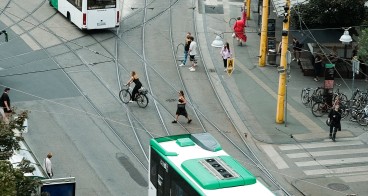
The data also flagged compliance issues: 2.76% of cars and 3.14% of trucks overstayed the permitted loading time, which Trondheim Kommune calculated could generate roughly £110,000 a year in enforcement revenue at this site if pursued. On safety, the pilot recorded 38 near-miss incidents a week between vehicles and the 5,409 weekly cyclists passing the zone. This translated into a rate of 7.02 per 1,000 trips, well above the typical 2-4, pointing to a real risk of injury collisions if left unaddressed.
Trondheim has since agreed to keep the system running for a further six months at a cost of £7,200, and the two partners are now exploring joint funding applications to scale the approach to other parts of the city.
- Loading bay congested 6% of the time, concentrated in a single peak hour
- Nearly 50% potential reduction in queuing through better delivery scheduling
- TRL progressed from 7 to 8 over the course of the pilot
Lessons learnt
The pilot showed how much can be learned from a relatively small, low-cost sensor deployment. Two months of data was enough to put real numbers on problems Trondheim had previously only suspected, from peak-hour queuing to unsafe interactions with cyclists, and that specificity is what made the case for the city to keep the system running.
It also surfaced gaps to work on. The dashboard was used directly by only two people within Trondheim Kommune during the pilot, so Digiflec's next step is building a self-serve front end that lets more city staff and logistics operators query the data themselves without going through the project team. The company is also planning to train its models to recognise scooters, a mode of transport common in Norwegian cities but rare in Digiflec's home patch of Scotland. This is a reminder that even a mature sensor platform needs retraining for new markets, not just redeployment. And because the pilot ran over just two autumn months, longer-term or seasonal patterns, such as how the bay behaves in summer, or across a full year, are still unknown. Extending the near-miss detection work and gathering data across different seasons are the logical next steps as the partnership continues.