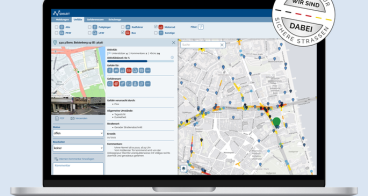


Lviv, Ukraine: traffic signs digital inventory

The Challenge
How can Lviv develop an accurate digital inventory of traffic signs and road markings to improve road safety and traffic management?
Lviv aims to test a cost-effective, data-driven approach to digitally inventory traffic signs and road markings in a pilot corridor. The city wants to demonstrate accurate and rapid detection using AI, enable near-real-time alerts for damaged or missing assets, and integrate the results into existing GIS and transport systems. The pilot is intended to validate feasibility, support faster maintenance responses, and provide a foundation for scaling a citywide digital road-safety inventory in the future.
Who can apply?
The RAPTOR Open Call 2026 is open to single small and medium-sized enterprises (SMEs). Proposals must be submitted by one legal entity only; consortia are not permitted.
Applicants must:
- Qualify as an SME under the European Commission definition
- Be legally established in an EU Member State or a Horizon Europe associated country
- Propose a solution addressing one RAPTOR 2026 City Challenge
Applicants may apply to multiple city challenges, but only one project can be funded per applicant.
For full requirements, visit the website.
Background
Lviv’s traffic signs and road markings are planned and installed by multiple contractors, with records stored only as paper documents or scanned files. The absence of a unified, digital database means the city lacks up-to-date information on the location, type, and condition of traffic assets. This fragmented system makes safety audits, maintenance planning, and traffic management inefficient and reactive. Missing or damaged signs can go unnoticed, increasing safety risks and affecting traffic flow. To overcome these challenges, Lviv needs a centralised digital inventory to support safer, more efficient, and data-driven traffic management.