

Batteries in urban mobility: from growth to responsibility
Batteries have become one of the most critical assets of our time. They power electric vehicles, stabilise renewable energy grids, enable portable electronics and underpin Europe’s ambitions for climate neutrality and energy independence. As deployment accelerates across sectors, batteries are no longer a niche technology but a core infrastructure of the energy transition.
Yet this rapid growth also brings a new reality into focus: the battery challenge is no longer only about production capacity. It is increasingly about how batteries are designed, used, monitored, reused and eventually recycled.
According to the International Energy Agency, EV battery demand continues to grow rapidly as electrification expands. Global demand for lithium-ion batteries is expected to increase severalfold by 2030, driven largely by transport electrification and renewable energy storage. In Europe alone, millions of electric vehicle batteries will reach the end of their first life over the coming decade. While this growth is essential for decarbonisation, it also raises pressing questions about raw material supply, environmental impact, safety and what happens to batteries once they are no longer fit for their original purpose.
Batteries are not disposable products. They are complex systems containing valuable - and often critical - raw materials such as lithium, cobalt, nickel, manganese and copper. If managed poorly, end-of-life batteries can become environmental liabilities and safety risks. If managed well, they can become a cornerstone of a more circular economy, extending value, reducing dependence on primary resources and lowering the overall footprint of electrification.
This article explores the evolving battery landscape: the challenges emerging as deployment scales, the opportunities across the value chain and how real-world projects and innovations are beginning to turn circular battery ambitions into practice.
The growing battery reality: scale, speed and complexity
The rapid uptake of electric vehicles is often presented as a straightforward sustainability win, but the reality is more complex. Manufacturing batteries is resource- and energy-intensive, accounting for a significant share of an electric vehicle’s environmental footprint. As demand rises, so does pressure on global supply chains, many of which rely on imported materials.
Addressing this pressure requires managing batteries not as disposable components, but as assets with multiple value stages. In practice, this means following a value-preserving hierarchy. Repair restores a battery to safe working condition by replacing or fixing specific components instead of discarding the entire pack. Reuse returns that battery to the same type of mobility application, extending its first-life purpose. When it is no longer suitable for vehicle use but still retains functional capacity, it can be repurposed for less demanding applications, such as stationary energy storage supporting buildings or renewable integration. Only when the battery can no longer operate safely or efficiently does recycling take place, recovering critical raw materials like lithium, cobalt, nickel and copper to produce new batteries. This hierarchy reflects the circular approach embedded in the EU Battery Regulation (EU) 2023/1542 and broader European circular economy policy.
Together, these challenges underline a simple reality: scaling batteries sustainably requires more than manufacturing capacity. It requires systems, data and coordination across the entire battery lifecycle.
From a linear to a circular battery value chain
Historically, battery value chains have followed a largely linear model: produce, use, discard. At scale, this approach is no longer viable. Europe’s policy direction reflects this shift. The EU Battery Regulation introduces requirements around sustainability, battery passports, traceability and recycling efficiency, signalling a clear move toward lifecycle responsibility.
However, regulation alone does not solve practical challenges on the ground. Circularity depends on answering key operational questions:
- How can battery health and safety be assessed quickly and reliably?
- Which batteries are suitable for second-life applications, and which should go directly to recycling?
- How can battery data be shared securely across manufacturers, operators, recyclers and authorities?
This is where applied research and innovation play a critical role, translating policy ambition into workable solutions.
Smaller batteries, bigger impact
When discussing battery sustainability, scale matters as much as chemistry. A 2024 positioning paper by EIT Urban Mobility explores how batteries for light electric vehicles (LEVs) could support Europe’s transition to net-zero mobility by enabling a shift away from private car use.
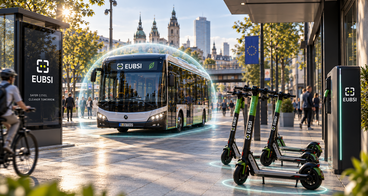
In Europe, LEVs - including e-bikes, e-scooters, e-mopeds and similar vehicles - are already a significant part of urban mobility. These vehicles have much smaller battery capacities than electric cars. As a result, the total battery mass and material demand for LEVs is far lower than for passenger electric vehicles.
For example, modelling in the report suggests that by 2030 just 2-3 % of Europe’s planned battery production capacity could supply the more than 25 million LEVs expected on European roads and still contribute to lowering emissions. Likewise, projections indicate that the annual battery energy demand for LEVs (approximately 36 GWh in 2030 and 71 GWh in 2040) will be about 10–30 times smaller than the battery demand projected for electric cars under current scenarios.
Because of their lower battery requirements and potential to replace short car trips, LEVs can also indirectly reduce material demand and emissions. According to the report and related research, a modal shift of around 13 % of daily short-distance trips (under approximately 8 km) from cars to LEVs could result in about 30 million tonnes of CO₂ equivalent savings by 2030, contributing to closing Europe’s transport emission gap.
Taken together, these findings highlight that not all electrification pathways are equally resource-intensive. In the context of urban areas, LEVs demonstrate how meaningful decarbonisation, reduced congestion and lower material demand can already be achieved by adopting vehicles with batteries designed for purpose, supported by a European battery value chain.
Battery swapping: improving LEV usability in practice
Despite their efficiency, LEVs face practical challenges - particularly around charging. Small batteries often mean frequent recharging, which can disrupt operations for professional users and reduce convenience for private ones.
In Antalya (Türkiye) and Dugopolje (Croatia), this issue was explored through real-world pilots of battery-swapping stations. Instead of waiting to recharge, users could exchange depleted batteries for fully charged ones in seconds, reducing downtime.
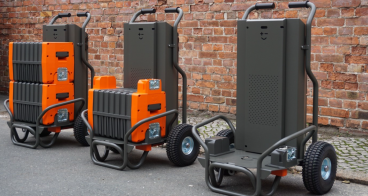
The pilots tested the CombiStation, a modular swapping solution designed for both professional fleets and private users. In Antalya, it supported intensive use by delivery services, city maintenance teams and security patrols, helping vehicles remain operational throughout the day. In Dugopolje, private users tested battery swapping in everyday mobility scenarios, removing the need for home charging.
The stations also integrated parcel lockers, linking clean mobility with local logistics - a combination users found particularly practical. Across both cities, the pilots recorded 30 battery swaps and 367 km travelled, demonstrating technical feasibility and user acceptance.
While local conditions influenced outcomes, the experience showed that battery swapping can improve the practicality of LEVs. It highlights that smart battery systems, not simply larger batteries, can support more efficient and accessible urban mobility.
Real-world innovation: BatteReverse and battery reverse logistics
Another critical but often overlooked part of the battery lifecycle is what happens after first use. BatteReverse, a European research and innovation project, addresses this gap by focusing on battery reverse logistics - the processes that bring used batteries back into reuse, repurposing or recycling streams as described above.
Rather than concentrating solely on production or recycling, BatteReverse takes a system-wide approach. The project recognises that inefficiencies, safety risks and data gaps at this stage can undermine the entire circular battery ecosystem.
According to Jerome Hazart, Senior Project Leader at CEA and Coordinator of the BatteReverse project – “If Europe wants an efficient circular battery economy preserving energy and rare materials, we can’t focus only on production and recycling. The missing link is reverse logistics - safe handling, reliable diagnostics and trusted shared data that decide whether a battery can be reused, repurposed or recycled.”
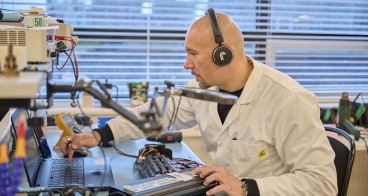
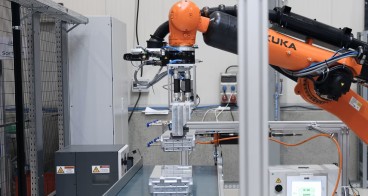
BatteReverse is developing and testing solutions that make reverse logistics safer and more reliable. These include improved diagnostics to assess battery health and remaining useful life, safer packaging and monitoring systems for transport and automated dismantling approaches that reduce human exposure to risk. The project also works on data interoperability through battery passports and digital twins, supporting better decision-making across the value chain.
By validating these solutions in operational settings, BatteReverse illustrates how circular battery systems can move from concept to practice - improving safety, reducing waste and unlocking additional value from used batteries.
Second-life applications are a key part of this picture. Many EV batteries retain significant capacity when they are no longer suitable for automotive use. Repurposing them for stationary energy storage can extend their lifespan by years and lower environmental impact. However, second-life deployment depends on trust in diagnostics, performance and safety - trust that projects like BatteReverse are helping to build.
Scaling responsibility alongside deployment
Europe’s battery future is not defined solely by gigafactories or vehicle sales. It depends on building resilient, circular and transparent battery ecosystems that can support growth over the long term.
This means:
- Designing batteries with reuse and recycling in mind
- Embedding data and traceability from the outset
- Investing in reverse logistics and second-life infrastructure
- Strengthening collaboration between industry, cities, researchers and policymakers
Many of these building blocks already exist, demonstrated by projects such as BatteReverse and pilots in battery swapping and LEV deployment. The challenge now is to connect these efforts, scale what works and ensure that Europe’s battery transition delivers not only electrification, but long-term sustainability, safety and value.