Shifting EV charging to periods of lower carbon intensity in Lisbon
Supported by EIT Urban Mobility
The Challenge
As electric vehicle (EV) adoption grows, the environmental benefits of electrification increasingly depend on when vehicles are charged. Electricity prices and carbon intensity fluctuate throughout the day, meaning that charging during peak-demand periods can increase both costs and emissions.
However, most EV users have limited visibility of these variations and few incentives to adapt their charging habits accordingly. This creates a missed opportunity to align EV charging with periods when renewable and lower-carbon electricity is more readily available. Emissium aimed to address this challenge by making real-time emissions and electricity price information accessible to EV users, encouraging more informed charging decisions and helping reduce the environmental impact of electric mobility.
The Solution
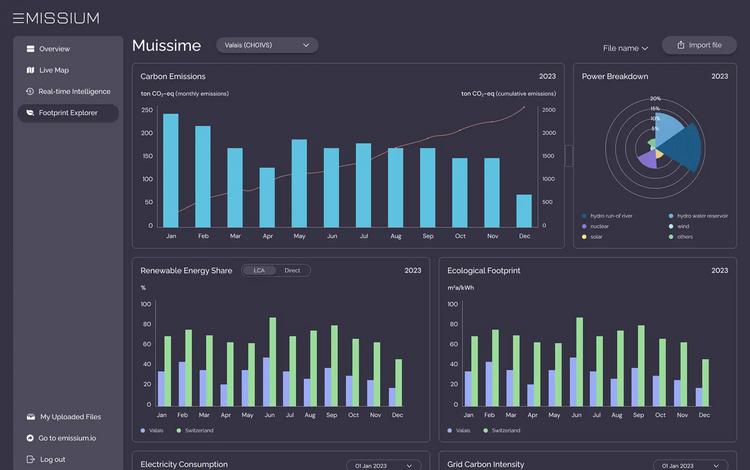
SmartCharge Optimizer is a data-driven software platform designed to shift EV charging towards periods when electricity is both cleaner and cheaper. The solution combines real-time electricity carbon intensity data with AI-based forecasting to identify optimal charging windows.
Through an intuitive digital dashboard, users can consult emissions and electricity price forecasts and adjust their charging schedules accordingly. The platform also incorporates a user incentive mechanism based on rewarding sustainable charging behaviour.
As part of the EVmobCS project, SmartCharge Optimizer was tested at the EV charging station of Instituto Superior Técnico (IST), University of Lisbon, Portugal. The demonstration enabled EV users to interact with the platform, monitor carbon intensity and pricing variations, and receive information to support more sustainable charging decisions. User feedback was also collected to inform further improvements to the software and its incentive mechanisms.
Making an impact
The demonstration involved 22 EV users, primarily university professors and staff, as well as students at Instituto Superior Técnico in Lisbon, Portugal. Participants accessed a live dashboard displaying electricity carbon intensity and pricing forecasts, allowing them to identify lower-carbon charging periods.
The pilot achieved an estimated average reduction of approximately 20% in CO₂ emissions per user compared with baseline charging patterns. Furthermore, over 70% of participants changed their charging behaviour, shifting their charging sessions towards periods with lower electricity emissions. All 22 participants engaged with the platform and provided feedback through surveys and interviews.
The demonstration also validated the technical functionality of the platform, including real-time data monitoring, AI-based forecasting and backend analytics to track user interactions and charging patterns. These results demonstrated the potential of accessible environmental and cost information to encourage measurable behavioural changes and make EV charging more sustainable.
Lessons learnt
The pilot demonstrated that providing EV users with transparent, accessible information about electricity carbon intensity and pricing can be an effective trigger for more sustainable charging behaviour. Many participants had not previously considered the environmental impact of when they charged their vehicles, highlighting the importance of making this information visible and easy to understand.
The simplicity of the dashboard helped translate complex energy data into practical decisions, while user feedback provided valuable insights for further product development. Participants highlighted the potential of personalised notifications, comparative statistics showing collective environmental impact and integration with university sustainability initiatives. The demonstration also underlined the importance of combining technological solutions with behavioural incentives to encourage lasting changes in charging habits. For wider adoption, future deployments should focus on integrating the platform with existing charging infrastructure, refining the user experience and testing the solution with larger and more diverse groups of EV users.