

Improving public transport operations through traffic analytics
Supported by EIT Urban Mobility
The Challenge
Both Tel Aviv and Říčany face increasing pressure to manage public transport efficiently within complex urban environments where buses compete with private vehicles, freight traffic, pedestrians, cyclists and emerging mobility services.
In Tel Aviv, congestion along major corridors such as Yigal Alon Street leads to bus delays, unreliable schedules and reduced passenger satisfaction. The city's legacy public transport priority systems rely on transponder-based technologies that offer limited coverage, require dedicated roadside infrastructure and cannot dynamically respond to real-time traffic conditions or detect all road users.
In Říčany, the challenge centred on Masaryk Square and adjacent intersections, where high traffic volumes, multiple public transport stops, demand-responsive transport (DRT), senior taxi services and pedestrian activity create complex traffic interactions. The city required accurate, real-time traffic intelligence to support operational decisions, improve public transport priority and enhance safety without costly infrastructure upgrades. Both cities sought a scalable solution capable of leveraging existing camera infrastructure to provide comprehensive traffic monitoring, reliable analytics and data-driven optimisation of traffic signal operations.
The Solution
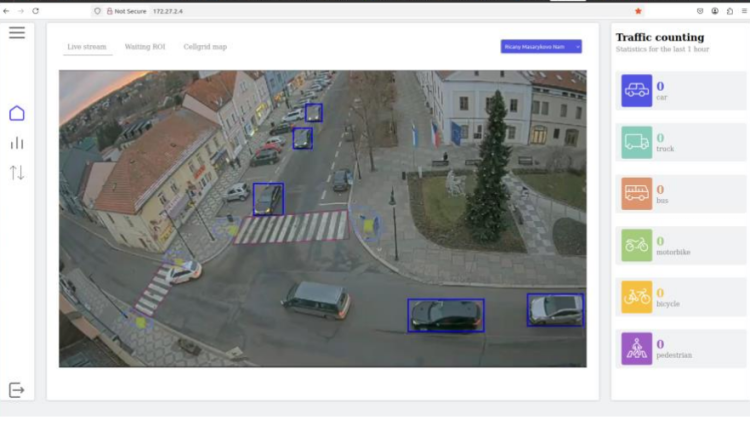
The pilot deployed AIMOVE's camera-based traffic analytics and intelligent traffic management solution using existing CCTV infrastructure. In Tel Aviv, the system was implemented along the Yigal Alon corridor covering five signalised intersections, while in Říčany it monitored Masaryk Square, two major intersections and one signalised junction.
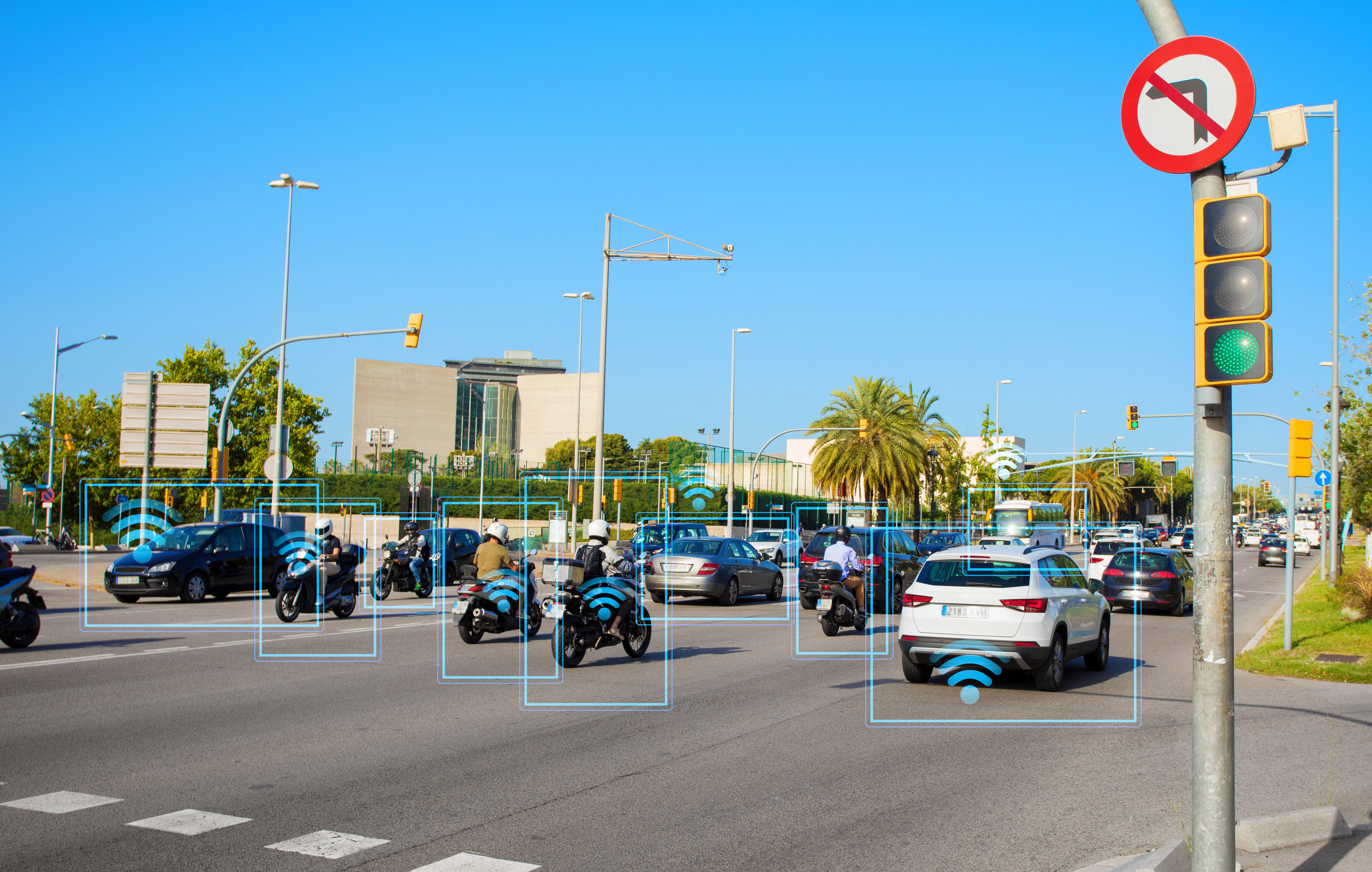
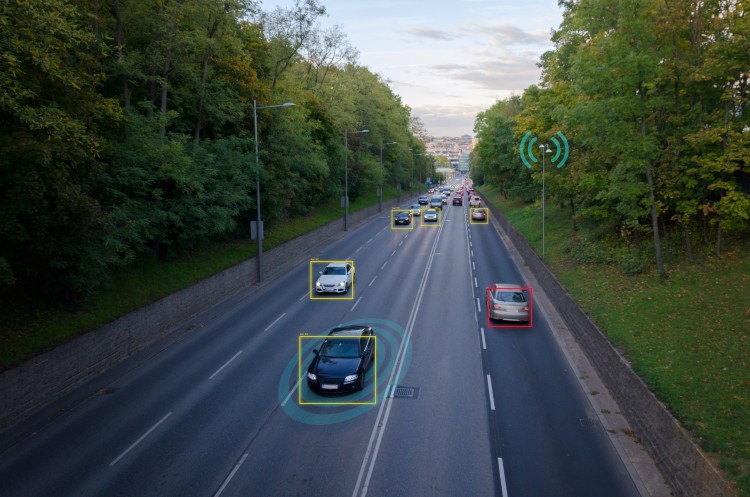
An on-premises edge server processed real-time video streams to detect and classify vehicles, buses, DRT services and traffic conditions without requiring additional roadside sensors. Following an initial learning phase to establish baseline traffic conditions, the platform generated detailed analytics on traffic volumes, queues, delays, travel times and congestion patterns.
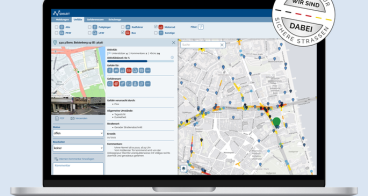
These insights were used to develop and simulate optimised traffic signal plans that prioritised public transport while maintaining acceptable traffic flow for other users. The pilots also delivered live dashboards, historical performance reporting and corridor-level impact assessments, providing city traffic management teams with reliable evidence to support operational decisions and future planning.
Making an impact
The pilots successfully demonstrated that AI-enabled traffic management can significantly improve the quality and availability of traffic data while supporting more effective public transport prioritisation. In both cities, the system achieved over 98% accuracy in automated traffic counting compared with manual validation, providing confidence in the reliability of AI-based analytics.
Simulation results indicated approximately 15% congestion reduction through optimised signal timing and public transport priority strategies. The solutions established comprehensive baseline datasets on traffic flows, travel times, queue lengths and controller performance, enabling objective impact assessments and evidence-based planning. Close collaboration between the technology provider and municipal traffic management teams ensured that the pilots were integrated into real operational processes.
In Tel Aviv, the successful demonstration generated strong interest from city leadership, leading to discussions on scaling the solution across additional corridors, with commercial deployment planned from 2026. In Říčany, the collected analytics now provide the municipality with a robust evidence base to support future decisions on traffic organisation, public transport operations and wider deployment of AI-enabled traffic management solutions.
Lessons learnt
The pilots demonstrated that AI-enabled traffic management can be introduced rapidly and cost-effectively by leveraging existing CCTV infrastructure, avoiding the need for extensive new roadside equipment while still delivering accurate, real-time traffic intelligence. Establishing a robust baseline through an initial learning and calibration phase proved essential for measuring impacts and generating reliable optimisation recommendations. Equally important was the close collaboration between technology providers and municipal traffic authorities, ensuring that AI-generated signal timing proposals were validated, operationally feasible and compliant with local safety and regulatory requirements.
The projects also highlighted the value of simulation as a low-risk approach for testing traffic signal strategies before field implementation, allowing cities to quantify expected benefits and build confidence among decision-makers. High-accuracy traffic detection and comprehensive analytics provided municipalities with an objective evidence base for future mobility planning, public transport prioritisation and traffic management decisions.
Finally, early involvement of city leadership and continuous stakeholder engagement proved instrumental in creating support for wider deployment, demonstrating that successful AI pilots require not only technical performance but also strong institutional collaboration and alignment with long-term urban mobility strategies.