

Enforcing Smart Zones in Istanbul and Bucharest
Supported by EIT Urban Mobility
The Challenge
Urban logistics is a substantial and necessary part of city traffic systems. In dense, car-oriented and highly congested cities, curbside space is extremely scarce. When no dedicated and available unloading space exists, logistics vehicles are forced to block sidewalks, cycle lanes or traffic lanes. This creates unsafe traffic situations and puts additional pressure on enforcement teams, who must spend more time addressing improper logistics behaviour. At the same time, accessibility for pedestrians and mobility impaired users is reduced. Vehicles idle or circulate longer, which increases emissions and contributes to a decline in the quality and safety of the public realm.
The enforcement of conventional unloading zones is also complex and inefficient. In many cities, enforcement officers must wait for a fixed grace period, often up to 15 minutes, before confirming a violation. This makes enforcement time consuming and inefficient. In addition, drivers often lack a clear understanding of unloading zone regulations, partly due to the absence of standardised design and signage across Europe. As a result, compliance is low and traditional enforcement approaches lose effectiveness.
The Solution
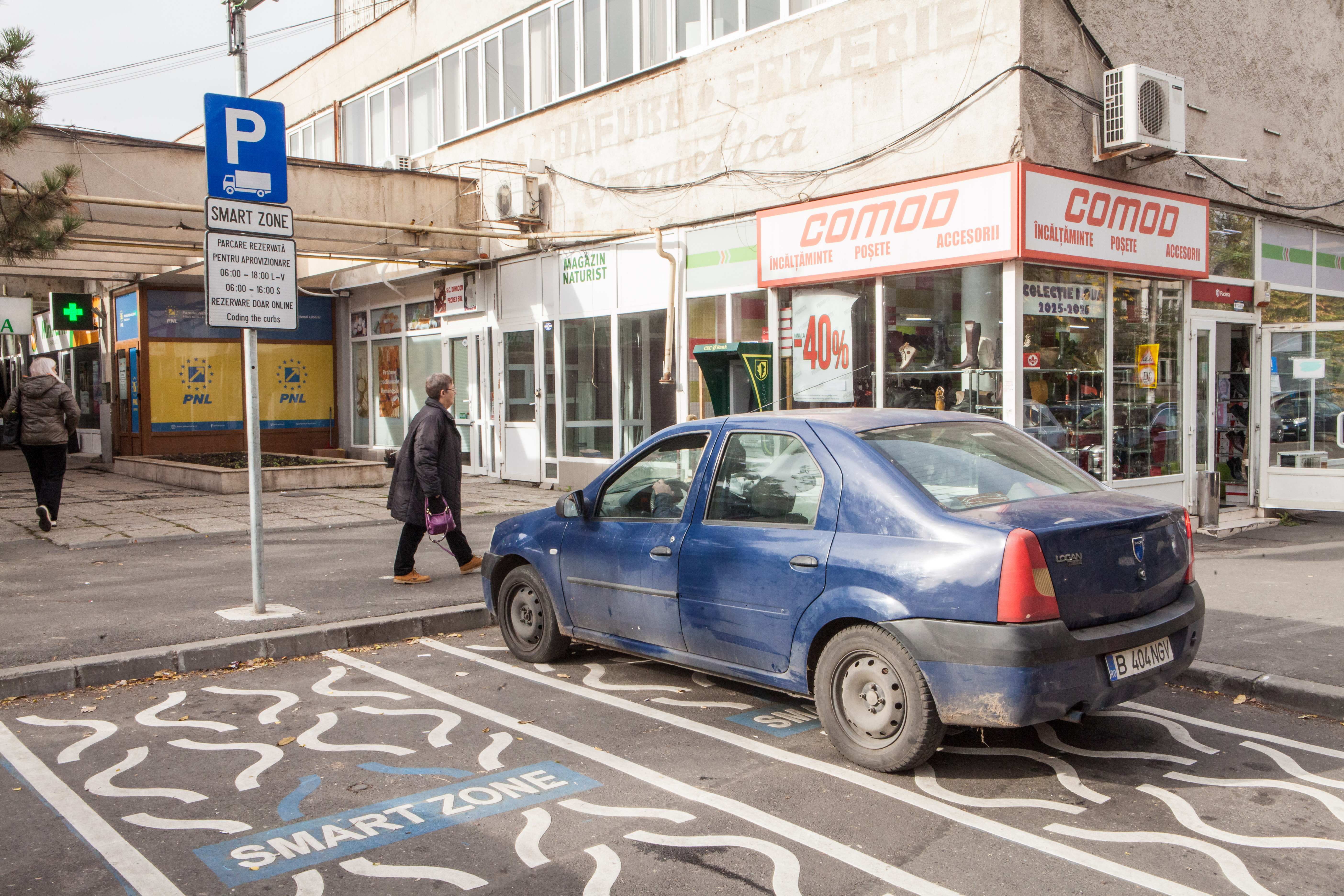
Coding the Curbs implemented Smart Zone interventions that directly address these challenges by providing dedicated, digitally managed curbside space for unloading activities.
The effectiveness of these zones relies on consistent and efficient enforcement. An Enforcement Module was developed as a key extension of the solution. Through smart alerts, enforcement officers are notified in real time when a violation occurs. This allows them to monitor compliance and process reports directly within a user-friendly app. Integration with the city’s fining system streamlines enforcement procedures and supports long-term behavioural change.
These efficiency gains reduce the time spent verifying violations and enable enforcement officers to focus more on other public safety tasks. This contributes to safer streets and improved urban liveability. The solution was co-developed with local enforcement teams in the Sector 6 of Bucharest and Kadıköy in Istanbul.

Making an impact
Across the pilots in Bucharest and Istanbul, early results demonstrate strong operational feasibility, effective enforcement and clear market acceptance. From the outset, adoption was evident. More than 130 sensor-based alerts of potential violations were recorded, with over one third resulting in filed violation reports after verification.
Following the introduction of the Enforcement Module, the average Smart Zone occupancy duration decreased by 35%, indicating a quicker turnover and a more efficient use of curbside space. Enforcement officers responded positively to the system, reporting a satisfaction rate of over 90%. As one officer noted: “Until now, enforcement relied on chance and offered no proof of violations. With real-time visibility, our response time is cut in half and we can finally ensure that everyone books a slot and respects the rules.”
Feedback from enforcement officers was continuously integrated through a co-creative approach, leading to a system update during the pilot phase. In parallel, one local legal adjustment was implemented in Bucharest to further support compliance.

Lessons learnt
1. Enforcement of unloading zones remains a legal grey area for cities in all of Europe. Logistics and effective management of space is becoming more of an agenda-item in recent years, with the rise of electric fleets, hubs and zero emission zones. Yet, without effective and smart enforcement, the key issues of congestion, dangerous traffic situations and unnecessary circulation will remain due to violations of unloading zones.
2. Cities use different methods to combat misuse of unloading zones. Because of this, co-development with local authorities and continuous feedback loops are critical for operational and legal viability. The pilots revealed that even well designed digital solutions must adapt to local legal frameworks and on the ground practices. Direct officer feedback led to a system update during the pilot and triggered a local legal adjustment to ensure compliance. Scalability depends on the ability to adapt to local contexts, while early involvement of enforcement teams and municipalities accelerates learning, improves usability, and reduces barriers to scaling Smart Zone interventions across different city contexts.
3. Real-time and evidence-based enforcement is a key driver of behavioural change. The pilots showed that when violations are detected and acted upon quickly, compliance increases and curbside space is used more efficiently. Moving away from chance-based enforcement towards data-driven monitoring creates clarity for both officers and drivers.