

Digital twin for metropolitan transport planning in Barcelona
Supported by EIT Urban Mobility
The Challenge
The Barcelona Metropolitan Area (AMB) is responsible for transport planning across 36 municipalities, which requires the coordination of large volumes of mobility and infrastructure data. However, existing transport modelling tools tend to be quite fragmented, intensive, and require specialist expertise, making it difficult to evaluate alternative planning scenarios across a metropolitan-scale network.
Traditional modelling workflows also limit wider participation in the planning process, as they rely on specialist software and technical knowledge which is not accessible for many stakeholders. This can make it harder for planners and decision-makers to explore different mobility strategies, compare their potential impacts and communicate evidence clearly to different departments and stakeholders.
AMB therefore needed a more accessible and scalable approach that could bring together multiple mobility datasets within a single platform, simplify scenario testing and support transport planning in the wider Barcelona metropolitan area.
The Solution
To address these challenges, Transcality have further developed their PLAN digital twin platform for metropolitan transport planning through the PLANOVA project. Working closely with AMB, the platform was enhanced to process larger transport networks and datasets while also remaining accessible to users without specialist expertise.
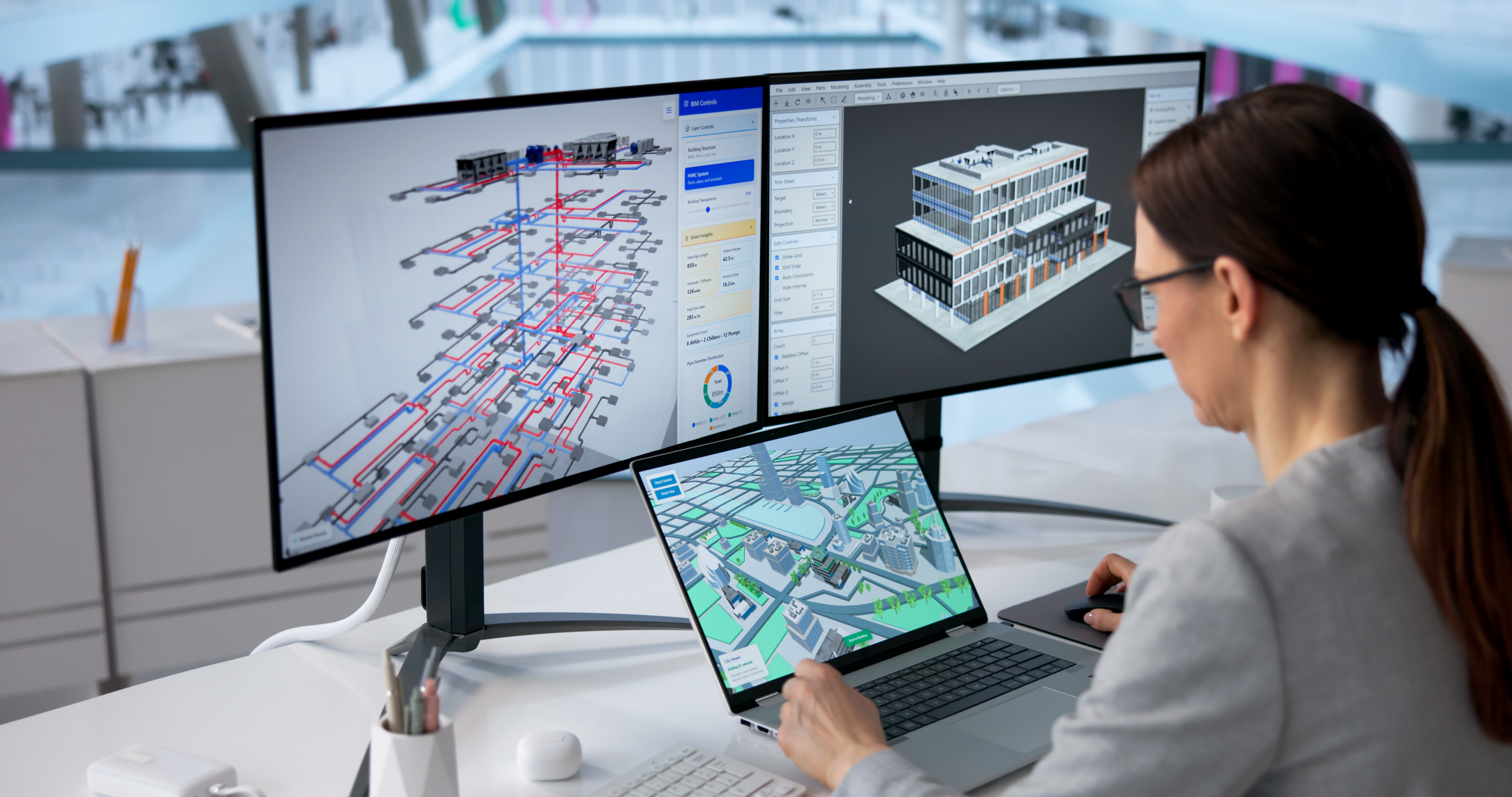
The platform integrates several mobility datasets into a single web application, enabling users to explore a digital twin of the transport network, simulate different planning scenarios and compare different mobility strategies. Throughout the pilot, AMB provided local mobility data, defined the planning use case and tested successive versions of the platform. Feedback from the initial demonstration informed further improvements to the platform before the final deployment.
The project also introduced a redesigned user interface, Spanish language support and a new system architecture capable of modelling large metropolitan networks more efficiently. Together, these enhancements improved the platform's scalability and usability, which helps to contribute to more transparent and collaborative transport planning.

Making an impact
The PLANOVA pilot successfully demonstrated the application of a digital twin platform for metropolitan transport planning in collaboration with AMB. By testing the platform using local mobility data, the pilot validated both its technical performance and its suitability for use by non-specialist planners.
During the project, the platform progressed from Technology Readiness Level (TRL) 7 to TRL 8. A fresh system design reduced simulation result loading times by 80%, improving the performance of the web application while allowing for the modelling of larger metropolitan transport networks.
The pilot also laid the foundation for future deployment. Discussions are ongoing with AMB to continue using the platform beyond the project, with plans to integrate additional datasets and extend scenario modelling to other municipalities across the Barcelona metropolitan area.
Key results
- TRL 7 to TRL 8 achieved during the project
- 80% reduction in simulation result loading times
- Platform enhanced to support larger metropolitan transport networks
- 2 AMB planners participated in testing and validation
- Continued deployment discussions underway with AMB

Lessons learnt
Close collaboration with the end client was central to the project's success. By involving AMB throughout the development process, the consortium was able to refine the platform in response to user feedback and ensure that it addressed practical transport planning needs.
The pilot also highlighted the importance of usability alongside technical performance. Improvements such as Spanish language support, a redesigned interface and faster processing made advanced transport modelling more accessible to non-technical users.
Finally, the project demonstrated that digital twin platforms can be adapted for metropolitan-scale planning when supported by an efficient system design and local data. Future deployments could build on the pilot by incorporating additional datasets, expanding scenario modelling capabilities and engaging a wider group of planning stakeholders.