

Berlin, Germany: school route safety boost

The Challenge
How can Berlin quickly identify priority school routes to implement targeted road safety measures for children?
The challenge lies not only in analysing existing data, such as school locations, infrastructure, accident records, and traffic information, but also in defining which data sources should be included. Privacy concerns, particularly regarding personally reported data, mean that some information cannot be shared publicly. Therefore, the model must include mechanisms to simulate or anonymise sensitive information while maintaining accuracy. The resulting transparent model will provide a reliable basis for authorities to impose speed limits on the most critical school routes.
Who can apply?
The RAPTOR Open Call 2026 is open to single small and medium-sized enterprises (SMEs). Proposals must be submitted by one legal entity only; consortia are not permitted.
Applicants must:
- Qualify as an SME under the European Commission definition
- Be legally established in an EU Member State or a Horizon Europe associated country
- Propose a solution addressing one RAPTOR 2026 City Challenge
Applicants may apply to multiple city challenges, but only one project can be funded per applicant.
For full requirements, visit the website.
Background
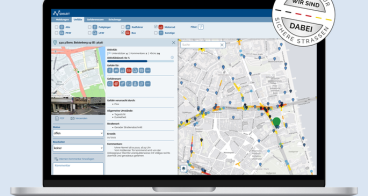
Berlin aims to improve road safety on school routes by moving from resource-intensive, local assessments to a standardised, data-driven approach covering the entire city. New legislation allows speed limits on heavily used school routes, but municipalities lack a consistent method to identify these routes efficiently. The city seeks to consolidate existing datasets—such as school locations, traffic, and accident data—into a scalable analytical model that identifies high-frequency school routes while addressing privacy constraints. Through the RAPTOR programme, Berlin is looking for solutions that support faster, evidence-based decisions and enable the effective implementation of safety measures citywide.