


Mobility Solutions for Public Transport
From buses to trains, public transport forms the backbone of urban mobility systems. Explore our curated selection of innovative public transport solutions, designed to transform how cities move.
Our solutionsEvery day, collective forms of transport move thousands of people through dense city centres, alleviating congestion and reducing pollution. Beyond traditional systems, the definition of public transport is expanding, with shared mobility modes such as bike-sharing and carpooling being considered, offering travellers additional options.
EIT Urban Mobility bridges the gap between technology and implementation by supporting solutions across the mobility landscape. Subtopics
Operational efficiency
As many cities contend with limited funding for public transport, there is increased pressure to make operations as cost- and resource-efficient as possible. Innovative solutions related to maintenance and routing, can help alleviate this pressure.
Find out more...Flexible and shared transport
Flexible and shared transport solutions are expanding travel options by offering on-demand, route-adaptive, and multimodal services. These options better respond to varying user needs - particularly in underserved or peripheral areas - but must be well integrated with existing public transport networks.
Find out more...Cooperative, Connected, and Automated Mobility (CCAM)
Driver alert systems have already significantly improved public transport vehicle safety in recent years. Now, Europe is taking the next step by preparing for the deployment of autonomous public transport vehicles on a large scale.
Find out more...Solutions for Public Transport
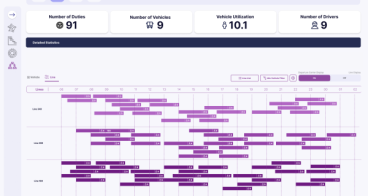
Parabol CERMONI
Cermoni is a public transport decision-support system that integrates data management (GTFS), advanced analytics (origin-destination analysis, transfers, etc.), and planning and optimisation (timetabling, vehicle and driver scheduling, rostering, and e-bus scheduling) into a single software.
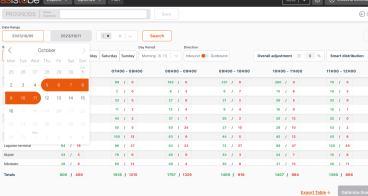
Asistobe PROGNOSIS
Asistobe PROGNOSIS provides AI-based automated predictions about the next period’s ridership and passenger onboarding/offboarding across the network for a specific line, station and period.

Theoremus Bus Data Platform
Theoremus provides AI bus operations platform using real-time GTFS/AVL and onboard crowding to show performance, optimise timetables and recommend live interventions to cut bunching and improve reliability.
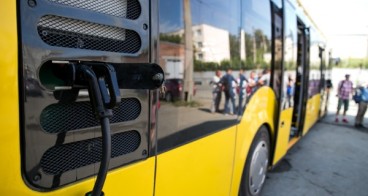
ACTIA SOH Fleet
ACTIA SOH Fleet is an innovation designed for Public Transport Operators (PTOs) and Authorities (PTAs) managing electric bus fleets. It combines a telematics gateway (TGUR), a data hub, and a SaaS web portal to deliver battery health monitoring, predictive analytics, and actionable insights.
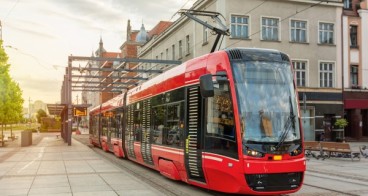
OTIV.TWO ADAS
OTIV.TWO ADAS provides intelligent forward collision warning to help prevent accidents and limit network disruptions. The system uses a combination of cameras and LiDAR to map the entire environment in front of the tram. The sensor suite is engineered to meet the highest safety and industry standards. It can be retrofitted to upgrade existing fleet, or installed in newly built rail vehicles.
UMOB
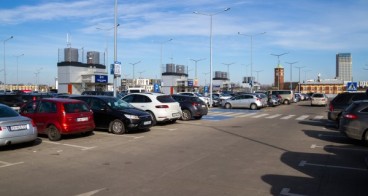
The umob app is designed to transform underused Park+Ride (P+R) facilities into powerful tools for relieving city congestion and promoting sustainable travel. The service combines digital parking reservations with instant mobility rewards: users book their P+R spot in advance, enter their license plate, and receive €10 in ride credit - instantly usable for public transport, shared bikes, or e-mopeds via the umob app.
Want to know more?
Contact us
-
Shared mobility options are a great way to extend the reach of your city’s core public transport network and address the first- and last-mile problem, in which riders need support to get to or from mobility hubs. It also tends to be a more cost-effective solution than investing in traditional public transport options.
-
To maximise the use of shared mobility, these modes need to be well integrated with the existing public transport system, to make multimodal trips seamless for users. Solutions related to mobility as a service (MaaS), integrated ticketing and joint planning can all contribute to a well-integrated mobility system.
-
There are a number of innovative solutions available that allow authorities to make their operations more efficient to reduce costs and create the opportunity to extend the network. For example, predictive maintenance can reduce long-term maintenance costs or network planning tools can better adapt bus routes to travel demand.
-
Autonomous vehicles have the potential to alleviate certain public transport challenges, such as the growing driver shortage. Many pilots have taken place around Europe already, and the coming years will see increased deployment of these solutions in cities like London and Oslo.
-
Artificial Intelligence is more than just large language models like ChatGPT or Gemini. Its capacity to analyse large amounts of data has made it very useful for different mobility-related uses. For instance, it can be used to analyse and plan bus routes or suggest increased frequency during forecasted peak times.
Discover, connect, innovate: explore Mobility Innovation Marketplace by EIT Urban Mobility.
Find the right solution, explore open calls or market opportunities. Our Marketplace brings together the leading mobility solutions across Europe, from electrification to active mobility, logistics and beyond.