

Ensuring reliable EV charging in urban parking: Thessaloniki and Tel Aviv
Supported by EIT Urban Mobility
The Challenge
Before implementation, the project identified a critical blind spot in urban EV infrastructure: the absence of effective monitoring and protection against grid-level vulnerabilities. Without advanced logging systems, several barriers to EV adoption became evident. Stakeholders highlighted the risk of “silent” electrical failures - such as neutral loss, phase imbalances, and overvoltage - that could damage equipment without immediate detection. Another major concern was charging discontinuity, where users might return to partially or fully uncharged vehicles due to unnoticed mid-session interruptions, undermining trust in public charging reliability. In addition, the lack of failure data created operational uncertainty, leaving infrastructure operators exposed to unpredictable maintenance costs and extended downtime, ultimately weakening the business case for EV deployment.
The project specifically addresses these challenges in high-density urban hubs, where the consequences of such failures are most pronounced. In Thessaloniki, particularly in public parking areas, heavy traffic and grid fluctuations threaten service continuity for commuters and visitors. Similarly, in Tel Aviv’s Atidim Business Park, a technology-driven district with a high concentration of EVs, robust safeguards are essential to prevent large-scale charging disruptions that could impact daily business operations.
The Solution
To address the identified challenges, EASE project was implemented in high-density parking facilities in Thessaloniki and Tel Aviv. The project focused on deploying and validating a dual-layer protection and continuity system under real operating conditions, aiming to eliminate “silent failures” and improve the reliability of EV charging infrastructure. By integrating advanced hardware directly into existing charging stations, the project moved beyond theoretical solutions to demonstrate practical resilience in the face of grid instability.
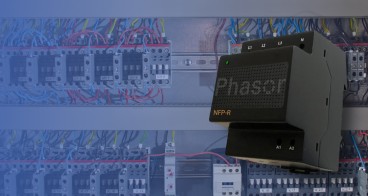
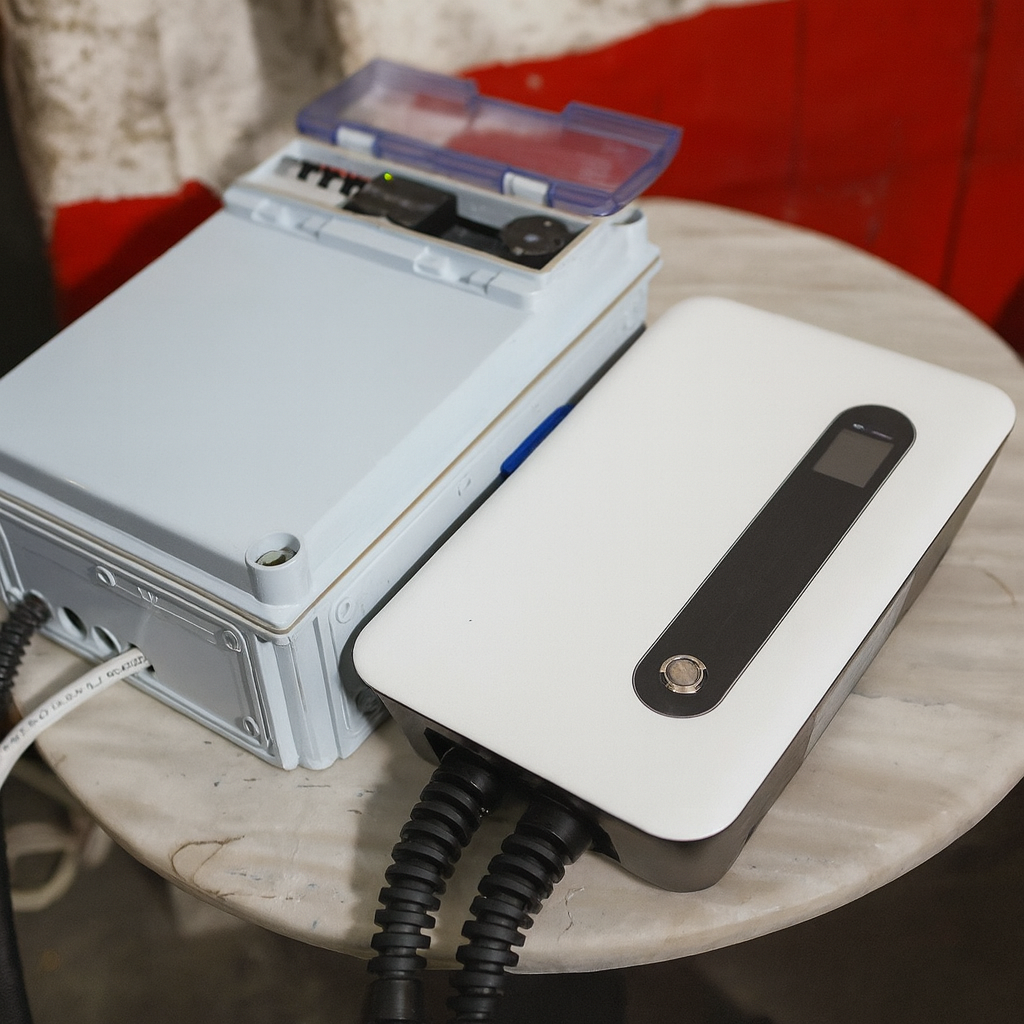
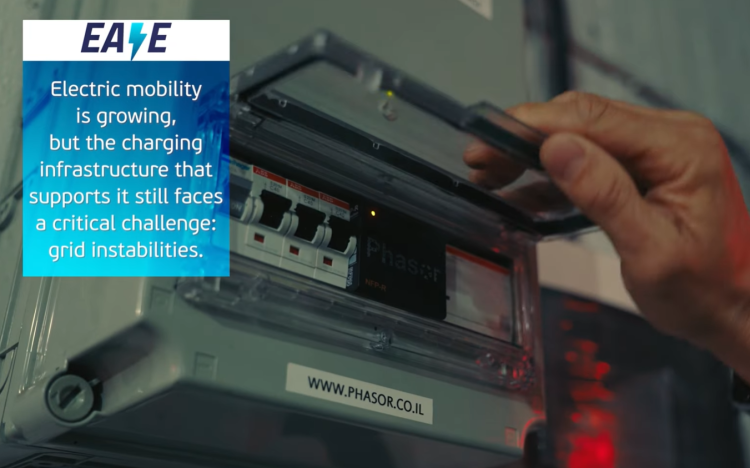
At the technical level, the system combined two key components: the Phasor NFPR (Neutral Fault Protection Relay), which safeguards equipment by instantly disconnecting power during neutral faults or overvoltage events and the Power Continuity Module (PCM), which maintains charging sessions during phase loss by dynamically managing available power. Together, these technologies ensured both asset protection and uninterrupted service.
In Tel Aviv, the pilot was conducted at Atidim Business Park using 18 charging stations, including three Afcon units, progressing from a controlled Proof of Concept to a live monitoring phase. In Thessaloniki, the project was implemented in collaboration with OTO S.A. across two central public parking sites—Aristotelous and Antigonidon—over six months, demonstrating the solution’s robustness in older grid conditions and busy urban contexts.
Making an impact
The project has demonstrated clear economic and social value by transforming vulnerable EV charging infrastructure into a resilient, user-centric service. At its core, it addressed a critical design flaw - where charger control cards depend on a single electrical phase - by ensuring that charging sessions remain active even when grid conditions deteriorate. This shift from fragility to resilience was not just theoretical but proven in real-world conditions across Tel Aviv and Thessaloniki.
During the pilot at Atidim Business Park in Tel Aviv, a phase loss event occurred that would typically result in a complete charger shutdown. Instead, thanks to the Power Continuity Module (PCM), the charger continued operating seamlessly - so much so that users were unaware any issue had occurred, effectively delivering 100% service continuity.
In parallel, the system successfully mitigated five major grid disturbances, including overvoltage events that could have caused equipment failure or interrupted charging sessions. Beyond reliability, the economic benefits were equally significant: by preventing control card burnout through the Neutral Fault Protection Relay (NFPR), the project avoided costly hardware replacements and safeguarded revenue streams for parking operators. Together, these outcomes highlight how resilient infrastructure can directly enhance both user trust and operational sustainability.
Lessons learnt
Challenges and learning points: while infrastructure projects often face complex deployment hurdles, the EASE implementation in Thessaloniki and Tel Aviv was remarkably smooth.
- Streamlined deployment: there were no challenges or pain points during installation. The hardware proved to be straightforward, requiring no specialised redesign of the existing sites.
- Key learning: the lack of friction confirmed that advanced grid protection does not need to be complex. The primary learning is that simplicity is a prerequisite for scalability. By keeping the installation process "plug-and-play," the solution can be deployed by standard electrical technicians without specialised training or lengthy site downtime.
Success factors and replication: several strategic approaches contributed to the pilot’s success and highlight its potential for global adoption:
- "Invisible" resilience: a major success factor was the PCM’s ability to maintain charging during the phase loss in without manual resets. The system solves problems before the user or operator even notices them.
- Rapid retrofitting: the ease of installation makes this an ideal solution for existing urban infrastructure. It allows municipalities to upgrade "legacy" chargers with modern grid protection quickly and cost-effectively.
- Universal applicability: testing in both public parking (Thessaloniki) and a private business park (Tel Aviv) proved the solution is effective regardless of the urban context or charger brand.