

Emergency response with Urban Air Mobility in Zaragoza and Tartu
Supported by EIT Urban Mobility
The Challenge
Urban emergency response systems face increasing pressure due to traffic congestion, physical barriers and growing urban density, which significantly affect response times in critical situations. In many cities, the delivery of life-saving medical supplies relies almost exclusively on road-based transport, making emergency logistics vulnerable to congestion, road accidents and infrastructure constraints such as river crossings or limited access zones.
These challenges are particularly acute in dense urban environments and peri-urban interfaces, where conventional emergency vehicles may experience delays precisely when rapid intervention is most critical. At the same time, cities are under pressure to reduce emissions and noise, limiting the feasibility of expanding traditional emergency vehicle fleets.
Before the implementation of U-SAVE, there was a clear gap between existing emergency logistics capabilities and the need for faster, cleaner and more resilient delivery solutions. While drone technology had been explored in controlled or rural settings, there was limited real-world validation of integrated, U-space-enabled aerial emergency logistics operating safely within complex urban environments and aligned with public authorities, emergency services and citizens.
U-SAVE addressed this challenge by demonstrating how aerial mobility can complement existing emergency responses, overcoming ground-level constraints while supporting sustainable urban mobility objectives.
The Solution
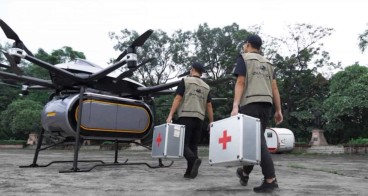
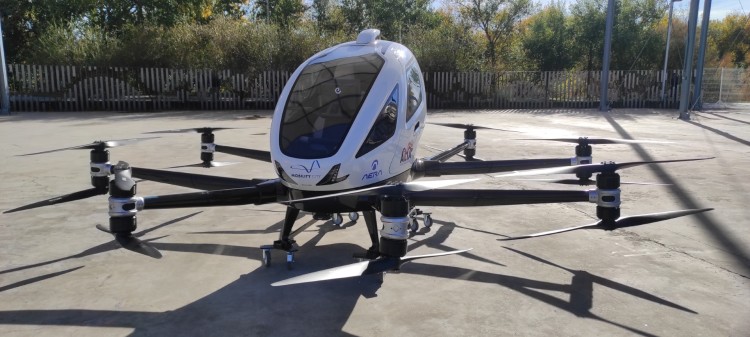
U-SAVE delivers an integrated aerial emergency logistics solution designed to complement existing urban emergency response systems and overcome ground-level constraints. The solution combines electric and hydrogen-powered drones, advanced U-space and traffic management services, and close coordination with public authorities and emergency services.
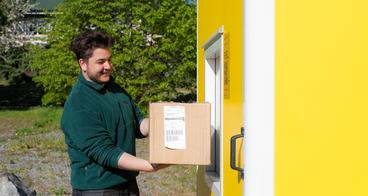
At its core, U-SAVE enables the rapid point-to-point delivery of critical medical supplies, bypassing road congestion, physical barriers and restricted access zones. The aerial platforms are supported by command-and-control systems, real-time telemetry, conformance monitoring, geofencing and Remote ID, ensuring safe and compliant operations within complex urban airspace.
A key feature of the solution is its operational resilience. U-SAVE integrates contingency procedures, fallback strategies and interoperability mechanisms to address signal degradation, airspace restrictions and dynamic urban conditions. This allows emergency missions to be executed reliably even in demanding environments.
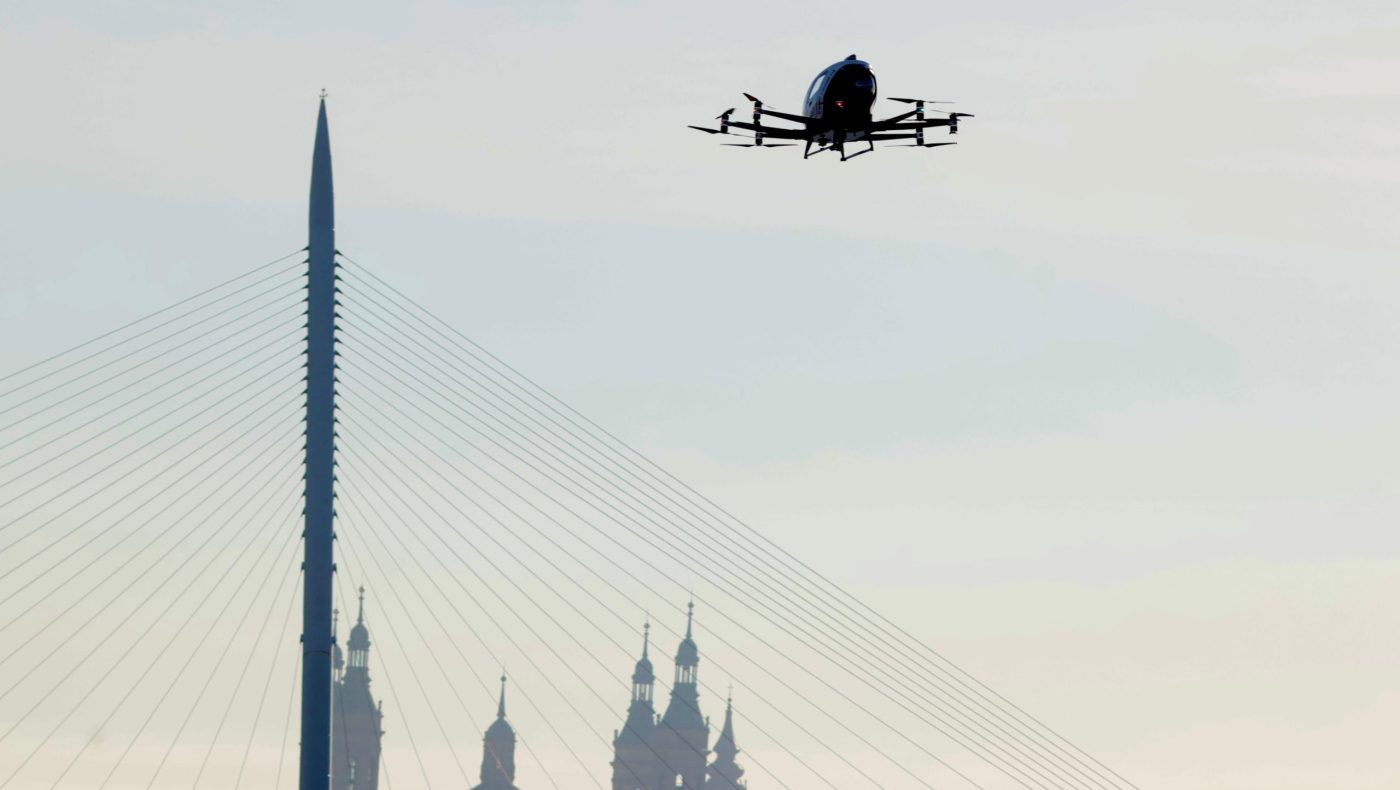
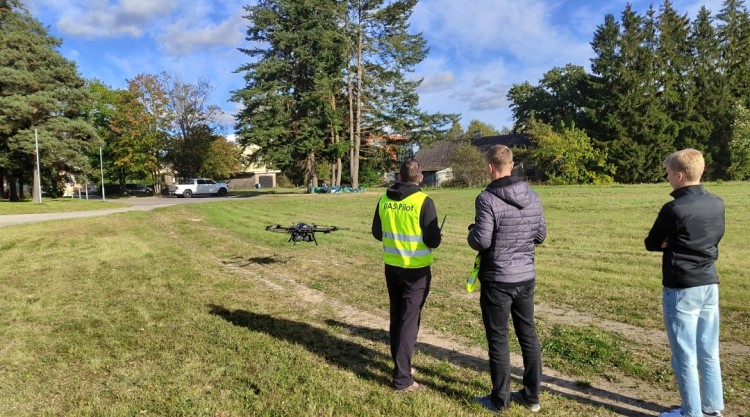
The solution was validated through large-scale demonstrations in Zaragoza (Spain) and Tartu (Estonia), covering both dense urban and urban–peri-urban scenarios. These pilots demonstrated how aerial emergency logistics can significantly reduce response times, lower local emissions and support more resilient emergency services.
Making an impact
U-SAVE achieved measurable social, ecological and economic impact by validating aerial emergency logistics in real urban environments.
From a social perspective, the pilots in Zaragoza and Tartu demonstrated the potential to reduce emergency logistics response times by up to 50% and up to 70% in time-critical scenarios, compared to conventional road-based delivery. The demonstrations were carried out in close collaboration with municipal authorities, emergency services, hospitals and aviation stakeholders, involving dozens of institutional actors across both cities. Public engagement actions, including open demonstrations and European Mobility Week activities, reached citizens, families and non-specialised audiences.
From an ecological perspective, the use of electric and hydrogen-powered drones enabled operations with near-zero direct CO₂ emissions, achieving up to 96% lower emissions compared to fuel-based ground transport in comparable urban–peri-urban routes, while also reducing congestion-related pollution.
From an economic and operational perspective, the pilots demonstrated around 60% lower operating costs per mission and validated interoperability with U-space services, telemetry and contingency procedures.
Local authorities highlighted the value of U-SAVE in strengthening urban resilience, emergency preparedness and sustainable mobility strategies, positioning the solution as a scalable model for European cities.
Lessons learnt
The deployment of the U-SAVE solution highlighted several important challenges and learning points relevant for future implementations. One key challenge was the complexity of airspace coordination, particularly in environments affected by GNSS interference, special NOTAMs or heightened security constraints. Addressing these conditions required more intensive coordination with aviation, security and defence authorities than initially anticipated, reinforcing the need for early and comprehensive stakeholder engagement.
Another challenge was related to public perception and sensitivity towards drone operations, especially in urban areas. This confirmed that technical readiness alone is not sufficient; transparent and proactive public communication is essential to ensure acceptance and smooth operations.
At the same time, several approaches proved critical to the success of the solution. Early involvement of municipalities, emergency services and hospitals enabled realistic operational design and strengthened institutional ownership.
The use of large-scale, real-life pilots allowed the consortium to validate not only technology, but also governance, coordination and contingency procedures. Finally, leveraging existing innovation ecosystems and cluster networks significantly increased dissemination reach and replication potential.