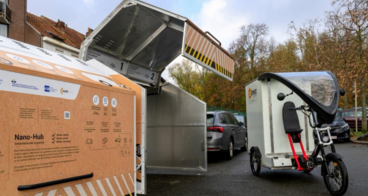


Battery swapping to scale zero-emission last-mile delivery in six cities
Supported by EIT Urban Mobility
The Challenge
European cities are experiencing rapid growth in last-mile delivery services, driven by e-commerce and food delivery platforms. This has increased congestion, air pollution, noise and pressure on urban infrastructure, particularly in dense city centres and residential areas. While electric vehicles offer a pathway towards cleaner urban logistics, their wider adoption is constrained by charging downtime, limited charging infrastructure and the operational inefficiencies associated with plug-in charging. These challenges are particularly significant for professional courier fleets that require continuous vehicle availability throughout the day.
The pilots, implemented in Bucharest, Constanța, Timișoara, Prague, Warsaw and Budapest, represented a diverse range of urban environments, including large metropolitan capitals, medium-sized innovation-oriented cities, historic centres with strict access regulations, and tourist destinations with strong seasonal demand. Despite these different contexts, all cities required a solution capable of maintaining high fleet utilisation, reducing emissions, minimising infrastructure requirements and supporting uninterrupted zero-emission delivery operations.
The Solution
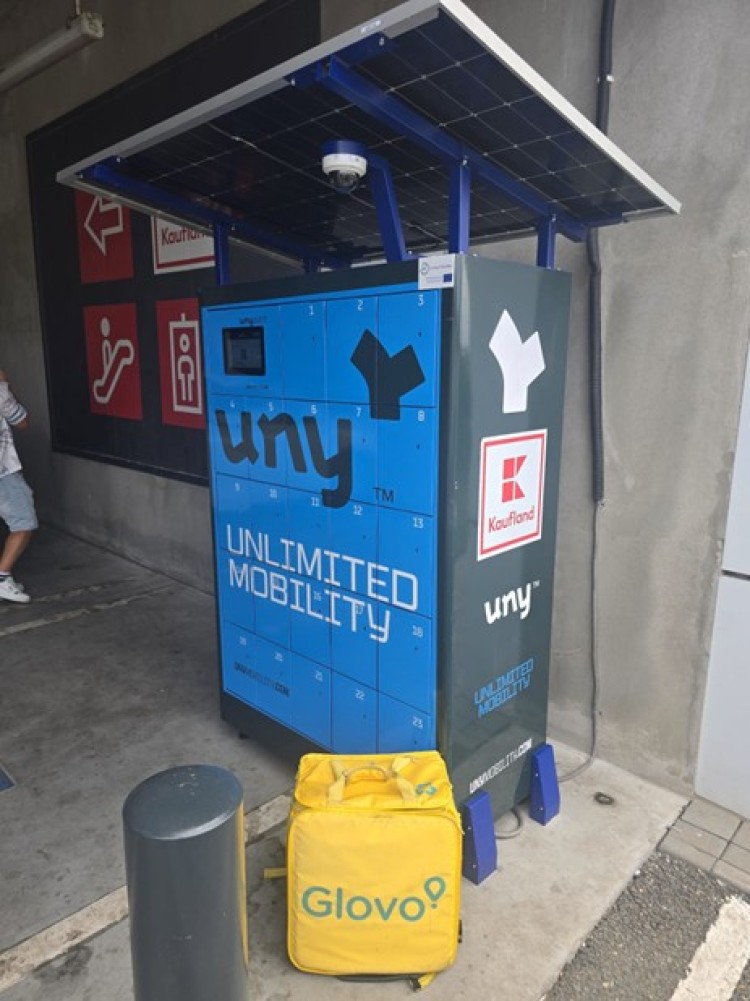
The pilots demonstrated UNY's swappable-battery ecosystem across six European cities under real commercial operating conditions. The solution integrates universal swappable batteries, automated swap stations, electric delivery vehicles and a digital fleet management platform. By replacing depleted batteries in under one minute, the system eliminated charging downtime and enabled continuous zero-emission delivery operations. Instead of waiting for vehicles to recharge, couriers replaced depleted batteries in less than one minute, enabling continuous operation throughout the working day.
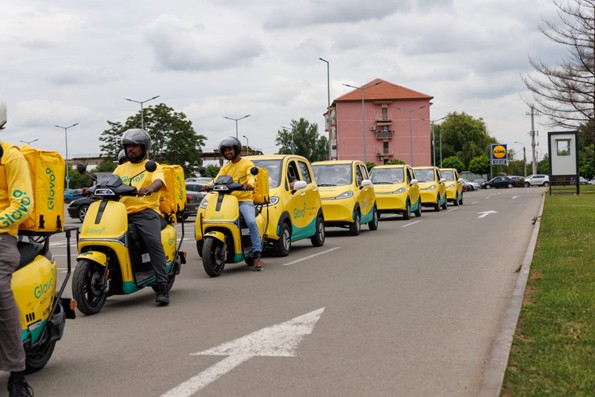
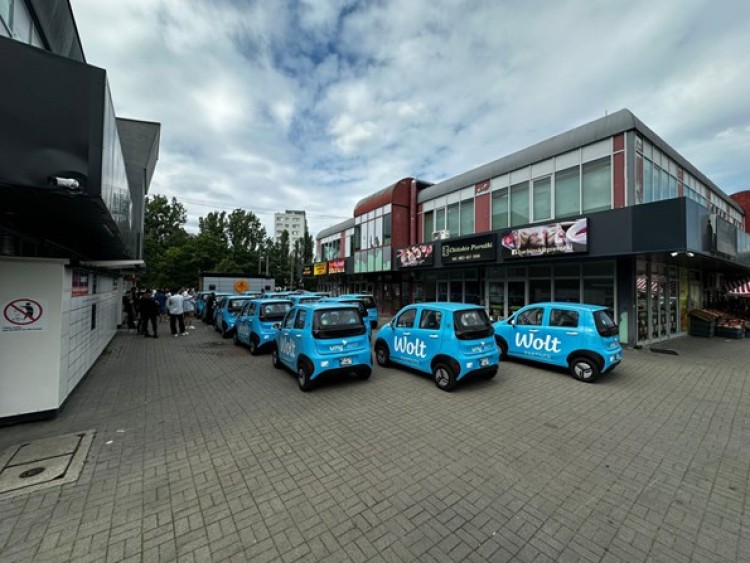
The pilots were carried out with professional delivery operators - including Wolt, Glovo and E-Mobility Rentals - and tested the solution under diverse operational conditions, ranging from dense capital cities and historic urban centres to medium-sized cities and seasonal tourist destinations. Throughout the pilots, the digital platform continuously monitored battery health, swap frequency, vehicle utilisation, fleet availability, kilometres travelled and environmental performance.
Municipal stakeholders supported deployment through local coordination and alignment with urban mobility objectives, while operational data enabled continuous optimisation of infrastructure placement and system performance. By eliminating charging downtime and avoiding the need for extensive charging infrastructure, the pilots demonstrated a flexible aapproach to supporting zero-emission last-mile logistics.
Making an impact
The pilots successfully validated the operational, technical and commercial readiness of the swappable-battery ecosystem across a wide range of European urban environments. Collectively, the six pilots achieved more than 800,000 zero-emission kilometres, completed over 11,000 battery swaps, and avoided approximately 123 tonnes of CO₂ emissions. Fleet availability consistently remained between 90% and 100%, effectively eliminating downtime associated with conventional charging and enabling uninterrupted delivery operations.
The pilots confirmed that battery swapping significantly improves fleet utilisation, increases courier productivity and supports reliable service even in cities with limited charging infrastructure, seasonal demand peaks or strict access regulations. Continuous monitoring through the digital platform provided valuable operational insights into battery performance, vehicle usage and infrastructure utilisation, supporting data-driven optimisation of the system. The successful demonstrations also strengthened partnerships with municipalities and logistics operators, paving the way for commercial expansion.
Discussions are underway in several pilot cities to increase fleet sizes and deploy additional Swap Stations, confirming the solution's potential to support long-term zero-emission urban logistics and contribute to wider sustainable mobility and climate objectives.
Lessons learnt
The pilots demonstrated that battery swapping is a practical and scalable alternative to conventional charging for professional last-mile delivery fleets. Across all six cities, the technology proved capable of maintaining high fleet availability while eliminating charging downtime, regardless of differences in city size, urban density, delivery demand or regulatory context.
The results showed that leveraging compact swap stations reduces dependence on extensive charging infrastructure and avoids additional pressure on local electricity grids, making the solution particularly attractive for dense urban areas where space is limited. Continuous monitoring through the digital platform enabled operators to optimise battery usage, station placement and fleet performance based on real operational data.
Close collaboration with municipalities, logistics operators and couriers was essential to ensure smooth deployment, user acceptance and integration with local mobility objectives. Finally, the pilots confirmed that a standardised swappable-battery ecosystem can be successfully replicated across diverse European cities, providing a commercially viable pathway towards cleaner, quieter and more efficient urban logistics while supporting municipal climate and air quality goals.