

AI-based analysis of cycling networks for safer infrastructure planning

Cyclists navigate complex urban environments daily, but traditional data sources rarely capture how these journeys are actually experienced.
Supported by EIT Urban Mobility
The Challenge
Urban cycling safety planning remains largely reactive, relying on delayed collision data, manual surveys and fixed infrastructure sensors. These approaches are incomplete and biased towards severe incidents, meaning near-misses, evasive manoeuvres and surface hazards are rarely captured.
In Dublin, as in many European cities, rapid growth in micromobility has outpaced the availability of high-resolution behavioural safety data. Existing datasets (counters, cameras and origin-destination data) describe movement but not rider experience.
This creates a critical gap for cities: the inability to identify emerging high-risk locations before collisions occur, prioritise interventions effectively, and evaluate infrastructure performance in real-world conditions.
A scalable, data-driven solution was required to detect, localise and rank hazardous cycling environments using real-world behavioural data at network scale.
The Solution
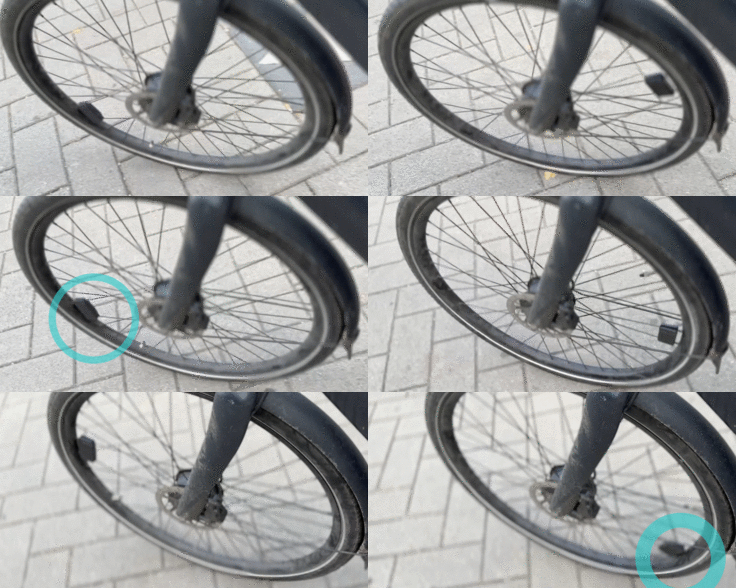
SPINOVATE project deployed connected SUMMIT2 telematic devices on shared Moby Bikes in Dublin, generating over 36,000 km of structured cycling behavioural data.
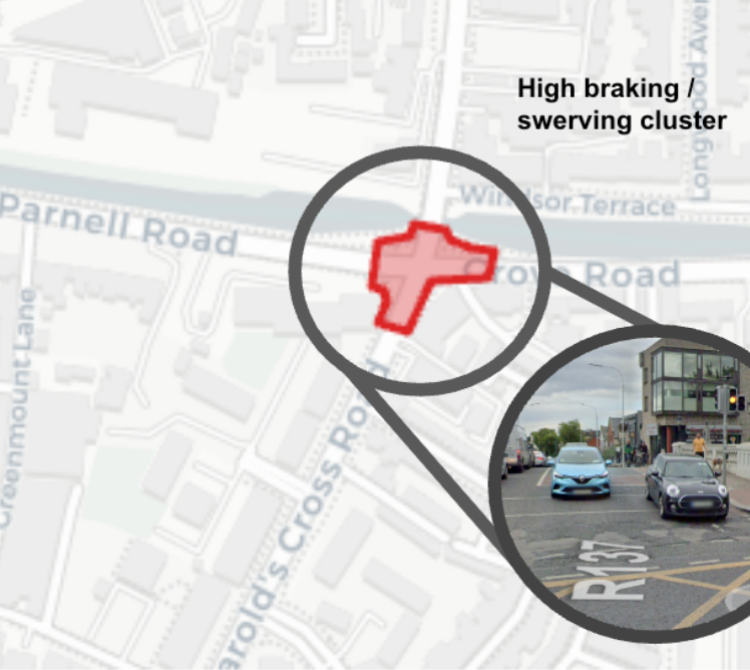
The system detects abnormal braking, swerving and surface disruption using adaptive baseline modelling, normalising for rider behaviour, bicycle type and device variability. Events are spatially clustered into hazard hotspots using uncertainty-aware positioning.
A multi-dimensional scoring model ranks locations based on scale, severity, complexity and temporal concentration of events. These insights are validated through fusion with rider perception data (via the See.Sense app) and external datasets, improving confidence and reducing false positives.
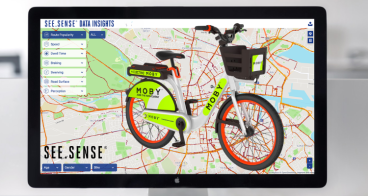
Outputs are delivered via an AI-powered dashboard, co-developed through a structured stakeholder process led by the University of Exeter (DIGIT Lab). The dashboard enables hotspot identification, before/after infrastructure evaluation and route demand analysis.
The innovation lies in shifting from static, collision-based analysis to continuous, behavioural and network-scale safety intelligence.
Making an impact
The pilot generated over 36,000 km of real-world cycling behavioural data across Dublin, providing a robust evidence base for infrastructure planning.
Key impacts include:
- Identification and prioritisation of 25+ high-risk cycling locations, including junction conflict zones and tram track hazards.
- Demonstration of measurable safety improvements, including a 40% reduction in braking and swerving events following infrastructure changes.
- Deployment of a fully operational end-to-end system integrating sensing, AI analytics and dashboard visualisation.
- Estimated 7.2 tonnes of CO₂ emissions avoided, linked to cycling activity
The project also demonstrated strong stakeholder engagement, with local authority partners validating outputs and exploring application to future infrastructure upgrades.
SPINOVATE received two AI Impact Awards (Digital Leaders), recognising both technical innovation and the collaborative, stakeholder-led development process.

Stakeholder workshops bringing together city planners, researchers and mobility partners to co-develop practical, data-driven cycling insights.
Lessons learnt
A key lesson is that technical capability alone is insufficient without strong stakeholder alignment. The structured, workshop-led process ensured that outputs were interpretable, relevant and aligned with real city planning workflows, increasing adoption potential.
Adaptive baseline modelling proved essential to manage variability in rider behaviour, bicycle types and device placement, significantly improving signal reliability compared to fixed thresholds.
Combining sensor-derived insights with rider perception data and external datasets increased confidence in outputs, reduced false positives and provided critical contextual understanding for decision-making.
Early integration of GDPR-compliant data governance is essential, particularly when scaling to wider user groups.
The approach is highly transferable to other cities with shared or fleet-based cycling schemes and is designed to complement, rather than replace, traditional transport datasets.
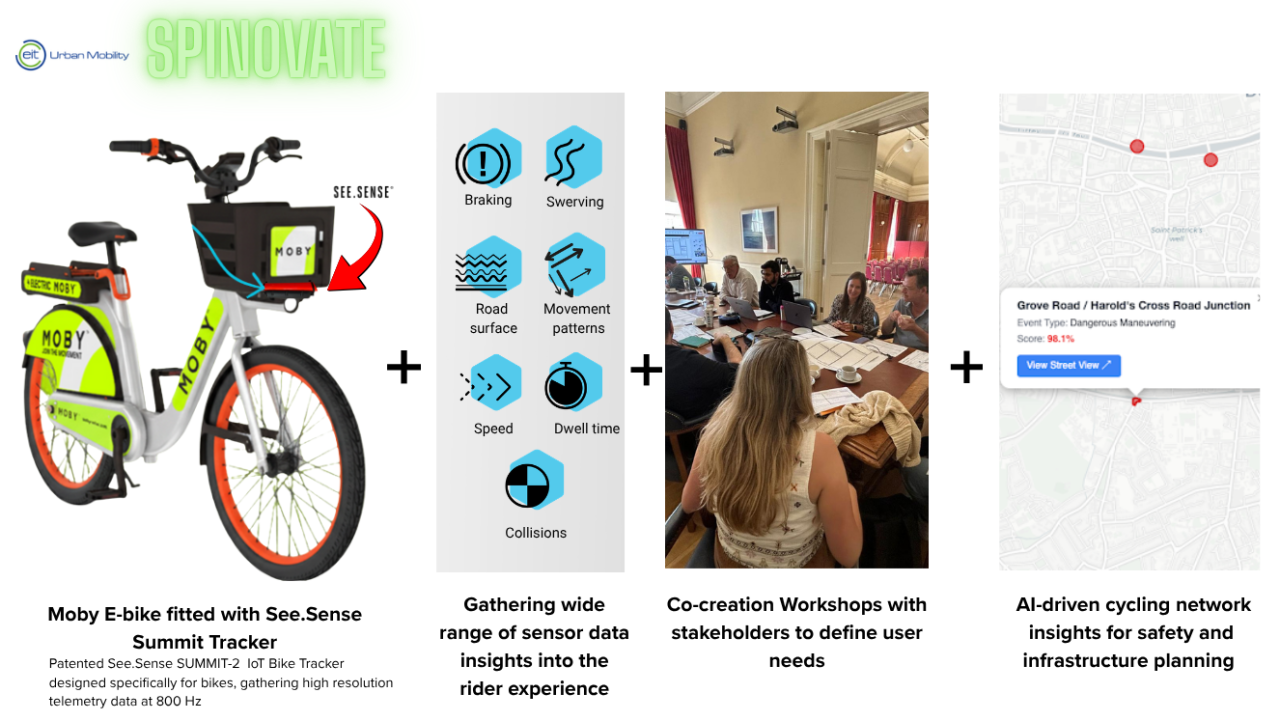
From connected e-bikes to AI insights: combining sensor data, stakeholder co-creation and analytics to support safer cycling and better infrastructure planning.

Winner of an AI Impact Award from Digital Leaders, in conjunction with University of Exeter for the Stakeholder co-creation programme.

Winner of the AI Impact Award (People's Choice) by Digital Leaders, in partnership with University of Exeter.
From connected e-bikes to AI insights: combining sensor data, stakeholder co-creation and analytics to support safer cycling and better infrastructure planning.
Winner of an AI Impact Award from Digital Leaders, in conjunction with University of Exeter for the Stakeholder co-creation programme.
Winner of the AI Impact Award (People's Choice) by Digital Leaders, in partnership with University of Exeter.