

Enhancing safety and coexistence at floating bus stops

Supported by EIT Urban Mobility
The Challenge
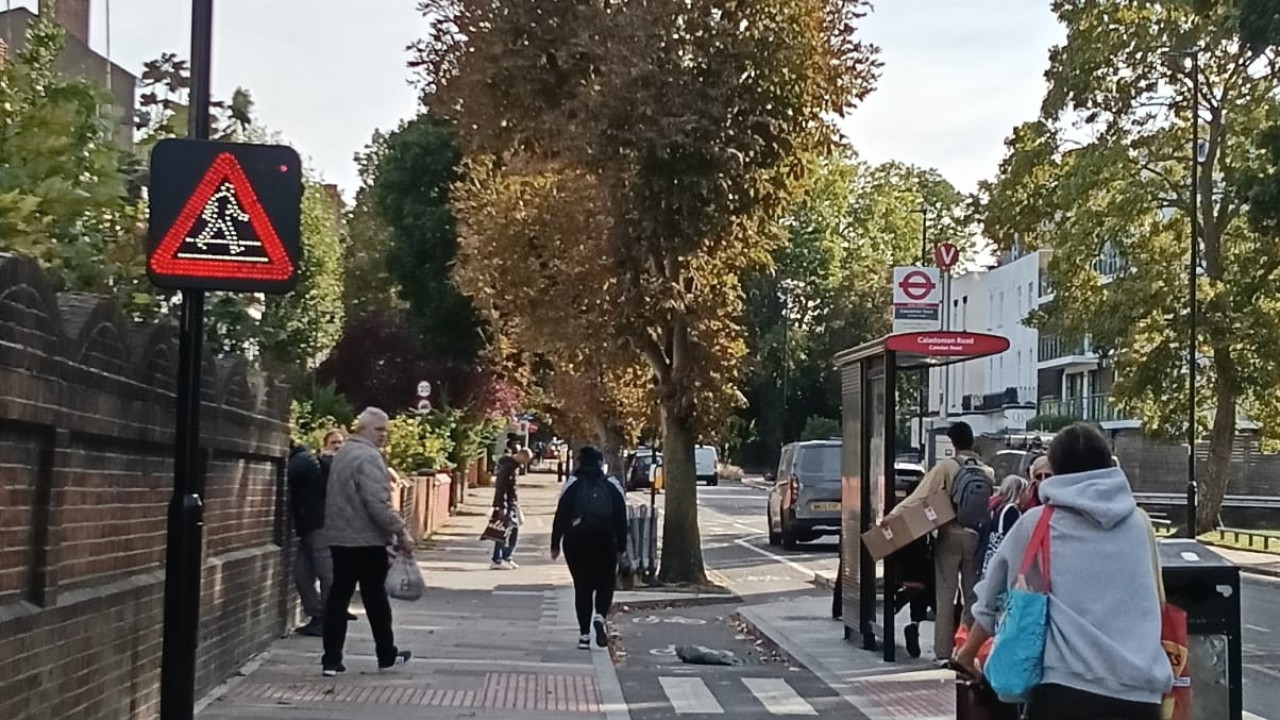
Floating bus stops (“bus stop bypasses”) create a high-risk interaction zone where cycle lanes run between the carriageway and the passenger boarding area. Passengers must cross the cycle lane to board or alight, while cyclists and micromobility users continue through the space, often at speed. This leads to frequent near-misses, uncertainty over priority and low yielding compliance, particularly affecting vulnerable users such as older adults, children and visually impaired pedestrians.
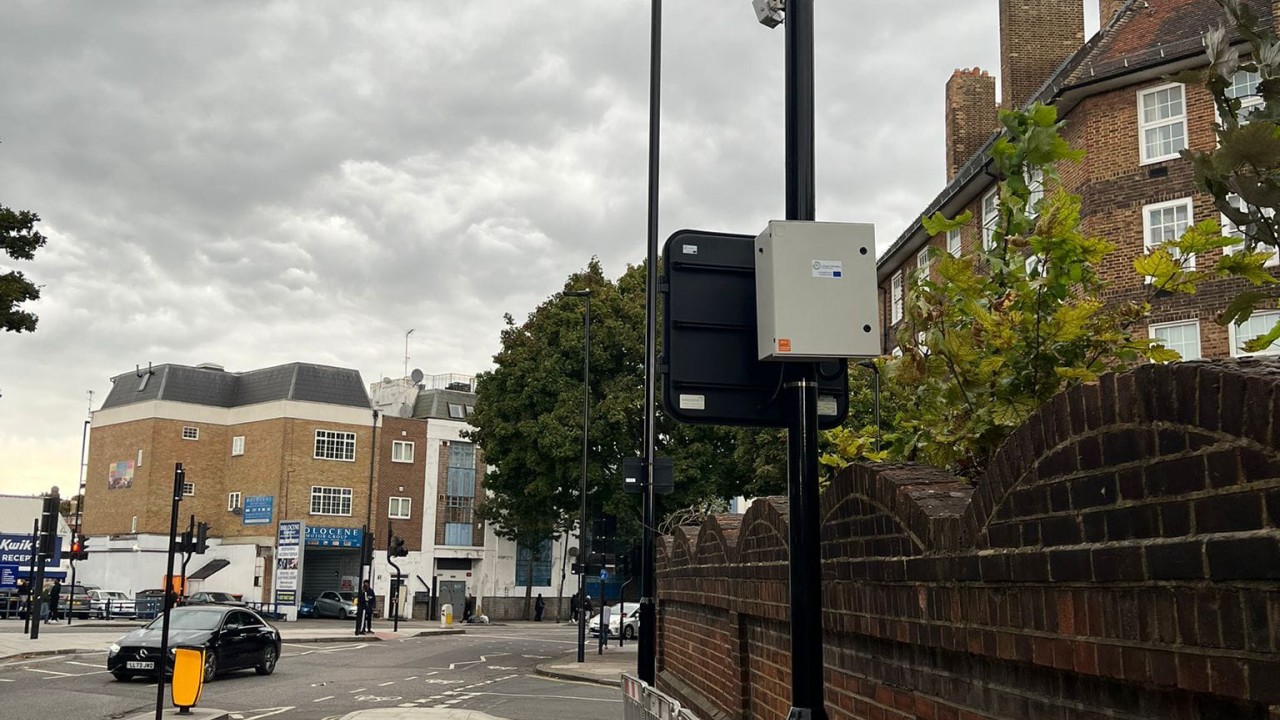
In London, Transport for London (TfL) identified significant cyclist non-yielding behaviour at pedestrian crossings within bus stop bypasses during its 2024 review. Baseline observations recorded more than 200 cyclist–pedestrian interactions, including over 150 “no yield” events (around 60% non-compliance). Surveys also showed that many pedestrians perceived the layouts as unsafe and often crossed outside the designated pedestrian crossing, typically waiting for cyclists rather than cyclists yielding.
In Barcelona, the Maragall Street layout places the cycle lane directly across the raised boarding platform, increasing the likelihood of conflicts exactly where passengers step on or off buses.
The challenge is therefore to improve noticeability, compliance, accessibility and perceived safety at these stops without major civil works.
The Solution
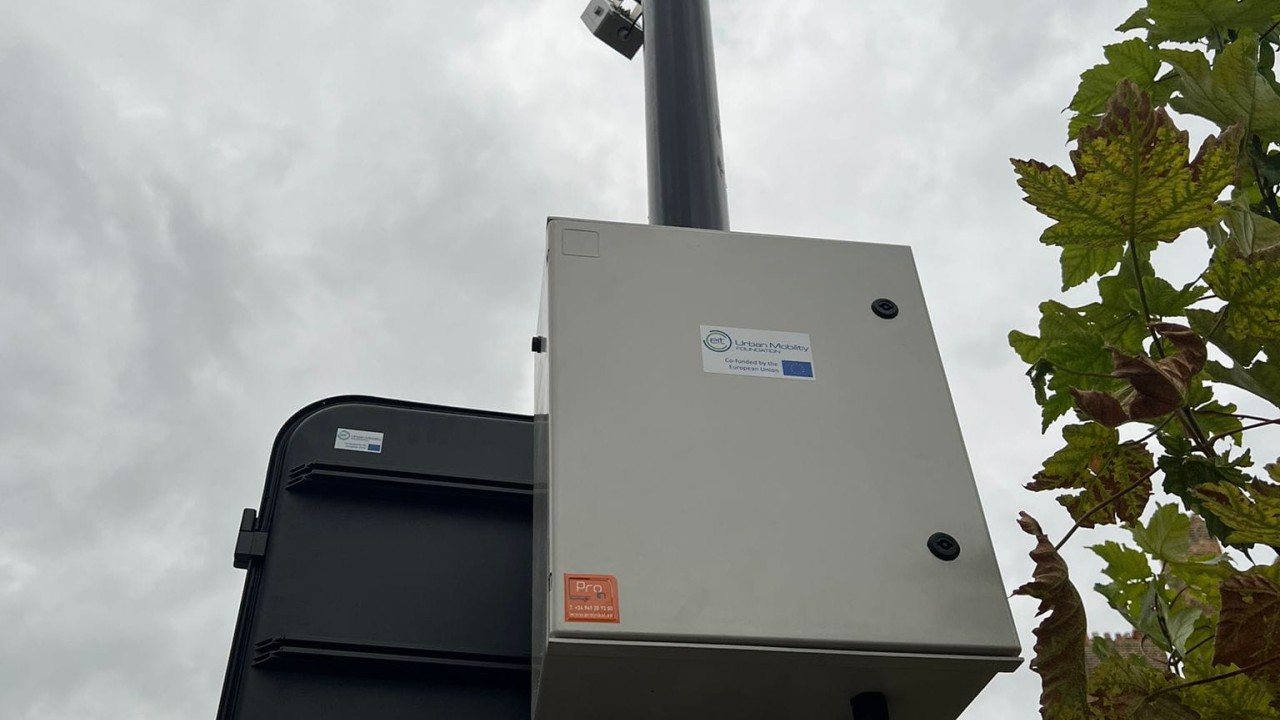
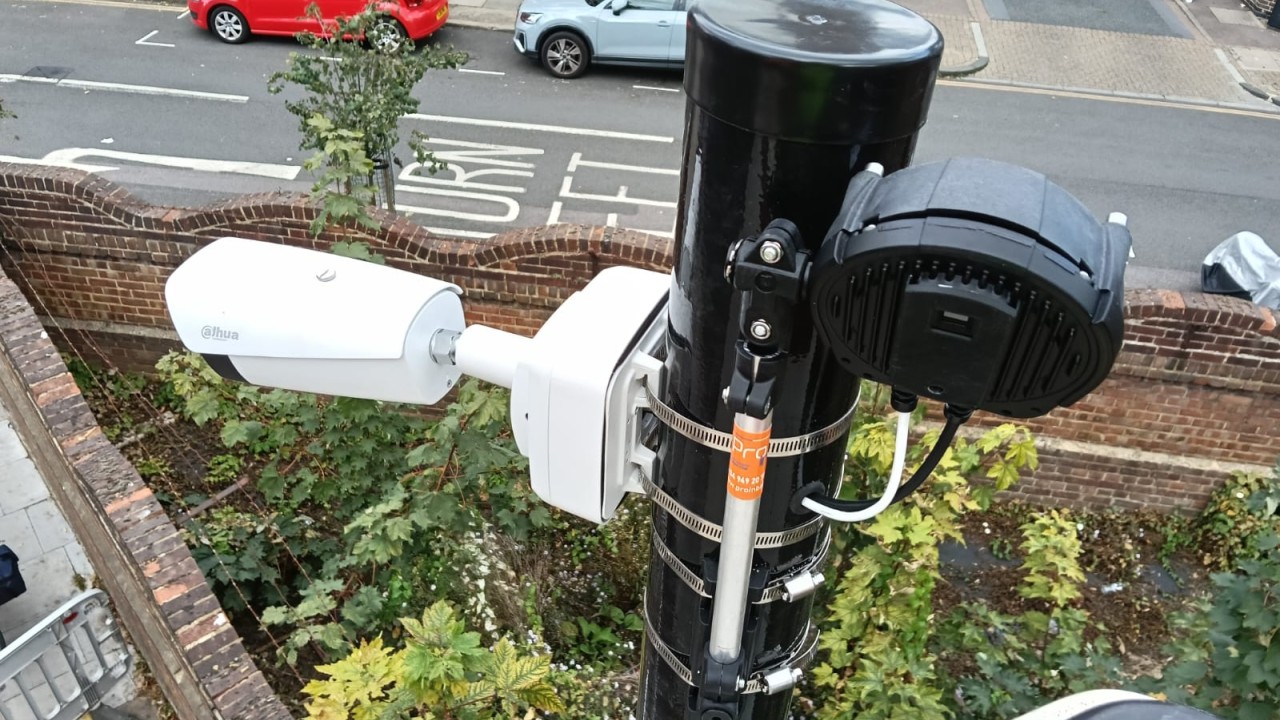
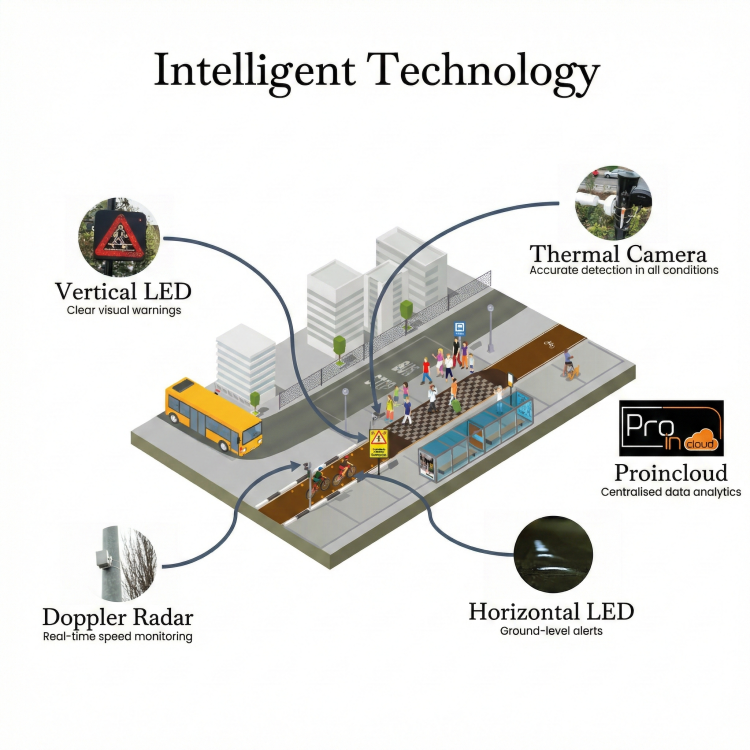
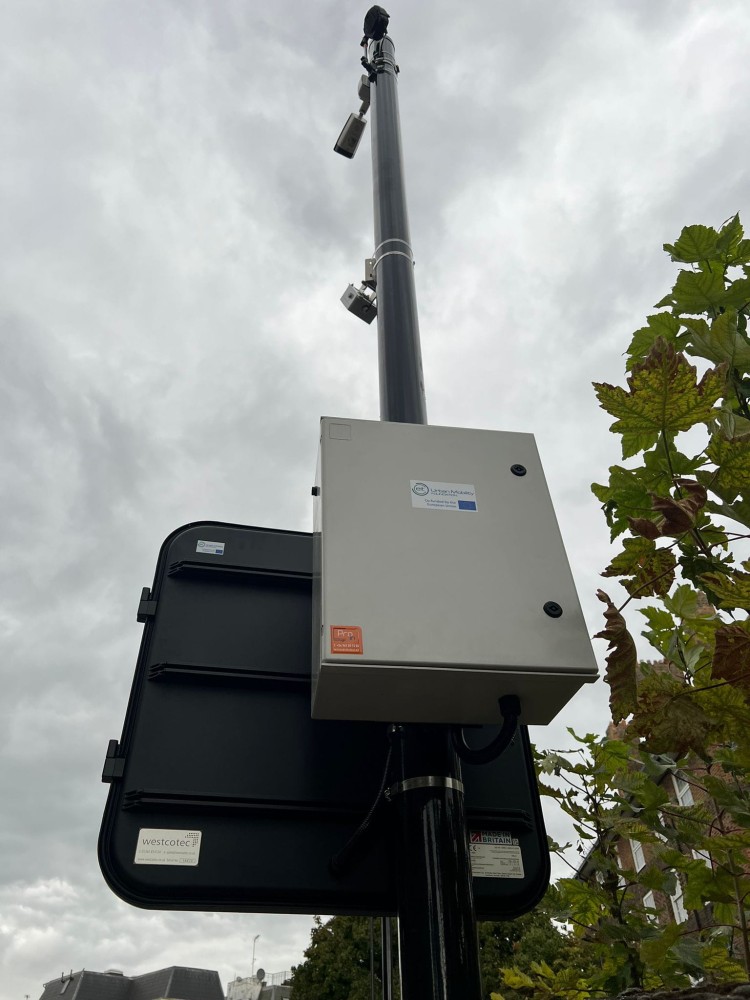
sHARMONY addresses this challenge through a real-time sensing and dynamic warning system designed specifically for floating bus stops and bus stop bypasses. The system combines thermal cameras with movement and speed detection technologies, including radar/Doppler sensing where applicable, to detect approaching cyclists, pedestrians crossing and bus arrival or departure events.
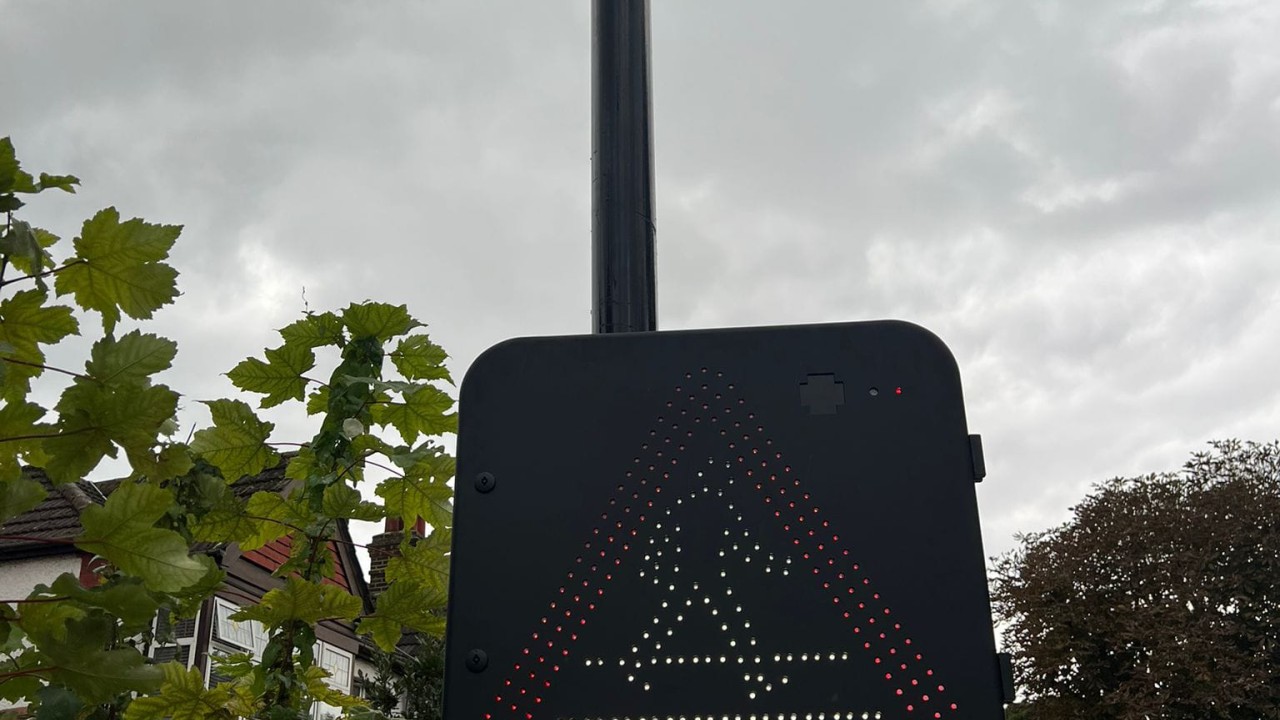
Based on these real-time conditions, a local control unit activates coordinated LED warning signals directed at cyclists and micromobility users only when a conflict risk is present. Unlike static signage, the warnings are adaptive and context-aware, improving user attention and behavioural compliance.
The operating logic is structured into four modes (A–D), with amber LED flashing increasing in frequency according to risk level, from no activation to high-frequency warnings when buses are approaching and passengers are boarding or alighting.
The system also includes connectivity (e.g. 4G) for remote monitoring and data transfer to the Proincloud platform, enabling supervision, diagnostics and KPI tracking such as user counts, speeds, detections and device health.
The result is a modular and scalable safety intervention designed to reduce near-misses, improve yielding behaviour and increase perceived safety and accessibility without requiring major civil works.
Making an impact
During the Barcelona pilot on the TMB network, sHARMONY demonstrated measurable social and operational impact at a bus stop bypass where cyclists and personal mobility vehicles (PMVs) cross the pedestrian boarding area. The evaluation combined on-street user interviews and structured field observations comparing two scenarios: Signal OFF (static signage only) and Signal ON (dynamic lighting active).
A total of 82 users were interviewed, with results showing strong real-world visibility and acceptance. 81.7% of participants reported noticing the signal, while the system achieved an average usefulness score of 7.4 out of 10. In total, 75% of respondents rated it highly (7–10), indicating broad public support for deployment.
In addition, 355 crossing events were observed over five days to assess behavioural changes. When the signal was active, cyclists and PMV users tended to ride at lower speeds, while high-speed movements decreased. Importantly, overall traffic flow remained stable, suggesting no negative impact on movement efficiency.
The effect was particularly clear during night and low-light conditions, where the dynamic lighting improved visibility and encouraged more cautious and predictable behaviour. This included speed reduction, stopping and fewer avoidance manoeuvres around the bus stop area.
Overall, the results show that dynamic, context-aware signalling can improve safety, coexistence and user confidence in mixed pedestrian–cycle environments.
Lessons learnt
Deploying sHARMONY in real street conditions showed that its value lies not in adding more signage, but in delivering the right warning at the right moment.
A key lesson is that context-driven activation is essential. Cyclists and micromobility users respond better when alerts are clearly linked to real events such as an approaching bus or passengers boarding. If signals trigger too often or without clear cause, users quickly lose trust and ignore them.
Performance also varies by time of day. The system is more effective at night and in low-light conditions, where LED signals are more visible and influential on behaviour. During daylight, effectiveness depends more on placement, contrast, and clearer cues (e.g. “SLOW” or “STOP”).
Another finding is that micromobility is not homogeneous. Cyclists and e-scooter/PMV users differ in speed, reaction time, and movement patterns, so detection and messaging must be adapted accordingly.
In addition, site-specific constraints strongly affect deployment. Each stop differs in geometry, visibility, infrastructure and connectivity, making a structured site survey and configuration checklist essential for scalable rollout.
Finally, evaluation must combine methods. Sensor data, behavioural observations, and short user interviews together provide more reliable evidence than any single method.
Overall, successful replication depends on co-design with cities and iterative tuning of detection thresholds and signal logic.