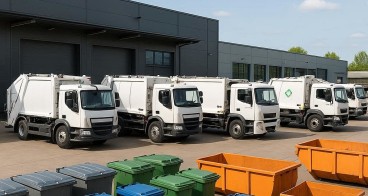


Reducing waste collection mileage in Cascais, Portugal
Supported by EIT Urban Mobility
The Challenge
Before the project was implemented, Cascais, Portugal, faced an operational challenge in improving the efficiency of its dense waste container collection network. Although the municipality already operated regular collection services, routing and scheduling decisions were largely static and offered limited opportunities for optimisation. In addition, local operational constraints meant that some waste streams - particularly mixed waste - required frequent collection, reducing flexibility to adjust routes and schedules.
The project aimed to address this challenge by using historical fill-rate data to cluster containers and generate optimised collection routes and schedules. The objective was to reduce unnecessary mileage and operational time while improving visibility of operational performance, including container status, vehicle movements, routes and traffic conditions.
Through the pilot, Cascais sought to improve service efficiency and cost control by reducing kilometres driven without compromising service quality or risking container overflow. At the same time, the city aimed to lower fuel consumption and greenhouse-gas emissions, improve local air quality, and introduce a transparent data-driven layer to support routing decisions and operational monitoring.
The Solution
ROSE is a route-optimisation module that integrates with existing Digital Waste Monitoring Platforms (DWMPs). It converts routine operational data into decisions on which containers should be serviced, when they should be collected, and which routes collection vehicles should follow.
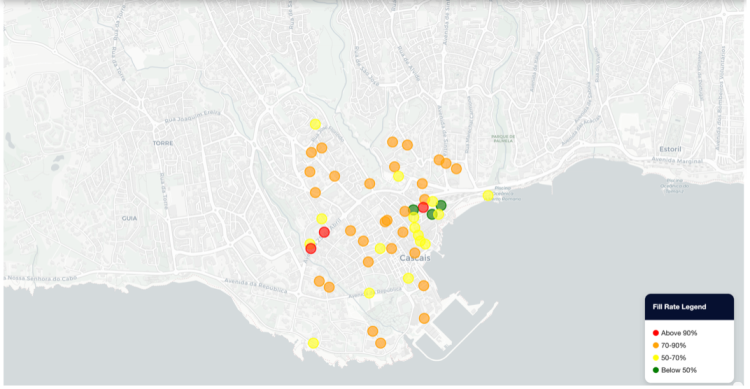
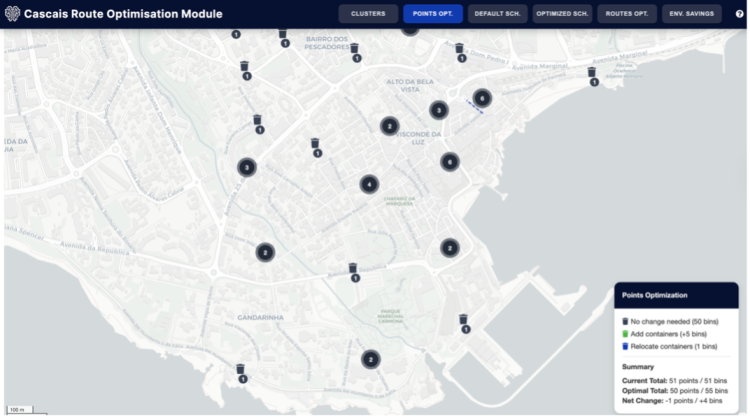
The platform analyses container locations and historical fill-level data to generate operational insights. Bins are grouped into geographic clusters and visualised through a Clusters Map, highlighting fill levels and priority areas. The system also performs bin placement analysis, identifying underused containers and areas with high demand and recommending relocations to improve utilisation and reduce overflow risks.
In addition, the solution recreates the current “as-operated” routes as a baseline and predicts fill behaviour to optimise collection frequency. These insights were combined to generate more efficient schedules and routes for each cluster, while an impact analysis module quantified potential savings in distance travelled, fuel consumption and emissions in Cascais. By replacing static routing with data-driven planning, the solution reduced kilometres travelled and time on the road while lowering fuel use, emissions and operational disruption.
Making an impact
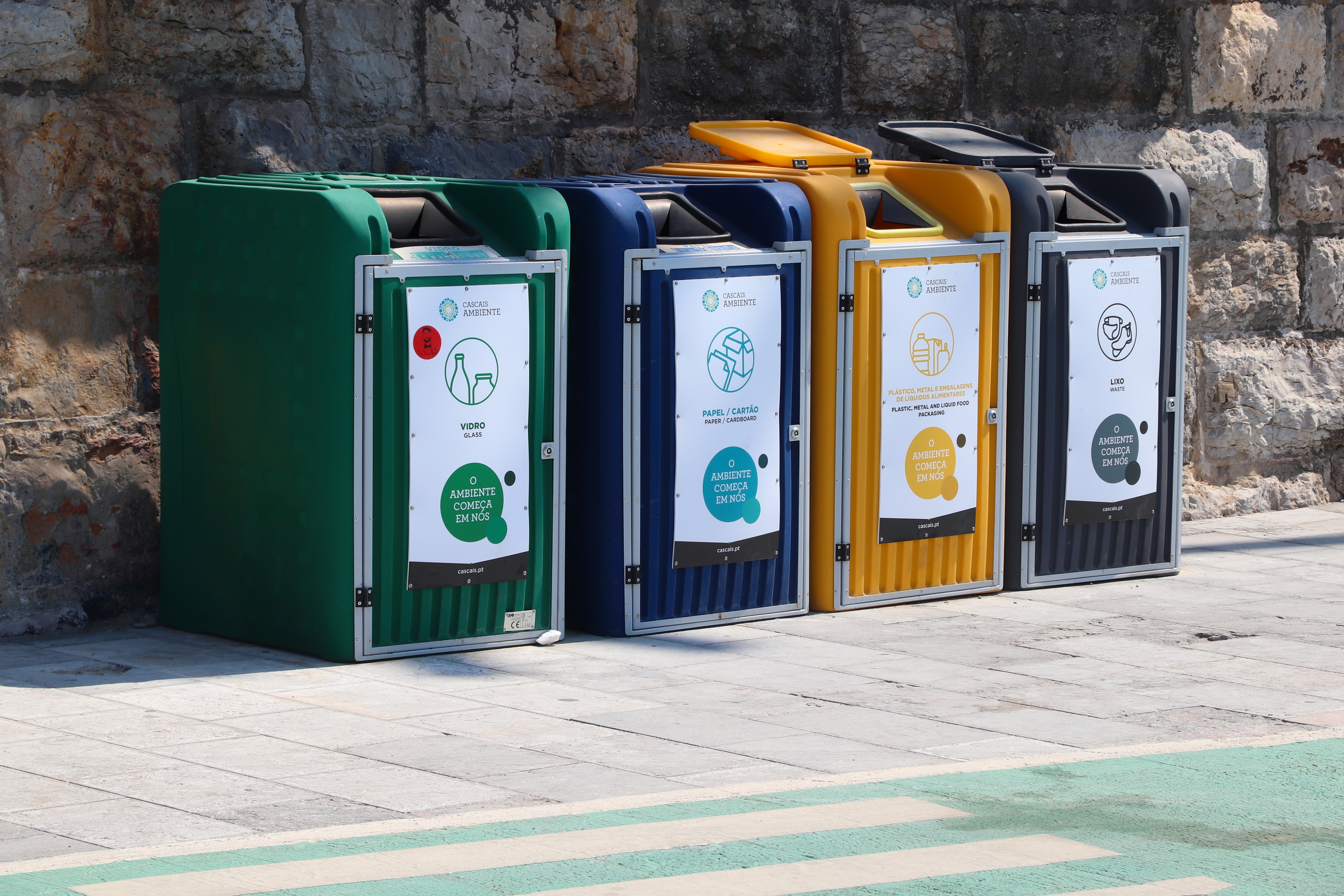
The solution was validated in Cascais through a pilot covering 51 paper waste containers. By applying data-driven scheduling and route optimisation, the platform demonstrated that measurable operational and environmental improvements can be achieved even within a relatively small container network.
Across the routes analysed during the pilot, weekly driving distance decreased by approximately 2–3%, resulting in proportional reductions in fuel consumption and associated emissions. More significant improvements were observed on medium-frequency residential routes, where optimisation reduced travelled distance by up to 12%, highlighting the potential benefits of targeted route optimisation in dense urban environments.
The pilot also identified opportunities for container-network optimisation. One container location was flagged for relocation while maintaining service coverage, and several containers could be moved from weekly to lower-frequency collection schedules. These findings indicate that greater efficiency gains could be achieved if the optimisation approach were extended beyond the initial 51 containers to the broader municipal network.
Lessons learnt
One key lesson from the Cascais pilot was the importance of operational flexibility when selecting waste streams for optimisation. Mixed-waste containers could not be included because they require daily collection, particularly during warmer periods, leaving little room to adjust service frequency without creating hygiene or overflow risks. This highlighted the need to focus optimisation efforts on waste fractions where scheduling can realistically be modified.
Another insight was that the level of achievable savings depends strongly on the baseline maturity of existing operations. Compared with the Montana pilot, the overall percentage savings in Cascais were smaller because the paper collection routes were already relatively efficient and shorter in distance.
However, the pilot clearly demonstrated where the optimisation platform provides the greatest value. On medium-frequency residential routes, the system identified CO₂ emissions reductions of up to 12%, confirming that significant optimisation potential exists even in well-performing systems when routing and service frequency decisions are carefully targeted.